

Cast of Wonders 713: This Story Isn’t The Story
Show Notes
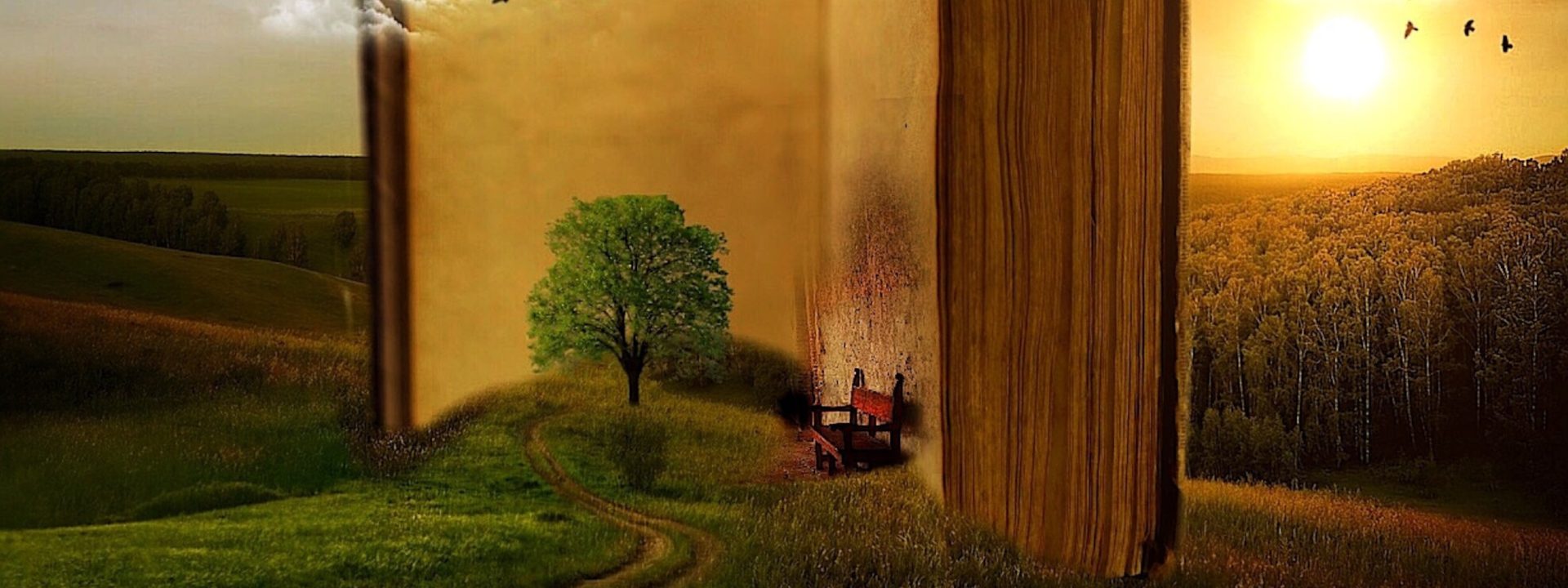
Image by Mystic Art Design from Pixabay
This Story isn’t the Story
by David Marino
In this story, there’s a Story. The capital is important.
The Story was one of those great tomes. You know the type. Leatherbound cover, one of those golden tongues to mark your place, big enough to bludgeon someone to death. A first page that said Once upon a time, in an ornate script that takes up a third of the stark browned vellum. A book well loved, well cared for, written in ink made from rainbows, illuminated with pictures and chapter headings, with a two-page map of a kingdom near the front.
But this Story was different. This Story was a world. Even when the book was closed, it was a living place, with people going about their lives. They knew they were in a book, and they knew, based on the stars in their sky and the weight of their history, that they were in a Story.
In this world, this closed book, there were two friends. Maybe twelve years old. Stephen and Rachel.
They both lived in a small village. You know the type. Rolling hills of farmland, a nearby forest teeming with ancient trees, a gentle river through a town square where a blacksmith’s forge billows smoke, where a windmill always turns. Stephen would cheer Rachel on as they vaulted the fence and snuck past Mr. Wuffles, the orchard keeper’s dog, to climb the trees, up and up to steal apples, hanging like wintertide ornaments, swaying like bells in the breeze. From their branches, through the green leaves, Rachel and Stephen would watch the clouds drift away. From here, or from the top of the windmill, or from the path outside those dark woods, Rachel and Stephen would talk about their futures, about all they would do. Rachel wanted to become a mighty hunter, protecting the village and the countryside with a bow as tall as she was, while Stephen wanted to move to the City to become an inventor. He had plans for an automated picker, something to make farmers’ lives easier. Both were worried about the Story. After all, it had been many years since it had started again, since the book that was their world opened to that Once Upon a Time. The elders said the story would sometimes take people from the realm and cast them in its grand design, like actors in a mummer’s play. The Story might even speak through some of them, in words written with rainbow ink.
Stephen said he wouldn’t mind having a bit part to play. Something to tell his grandkids about, like how Elder Mane from a few towns over helped the last Hero find his missing horse. Even if, rumor was, that he had never touched a horse until the story needed it from him, and now all he knew was horses. But Rachel didn’t want any part of it. If there must be a Story, so be it, but she wanted to live her life, going on her hunts, doing things that she did, not what some Story working through her forced her to do.
On her fifteenth birthday, Rachel went to the current hunter and asked to be his apprentice. He laughed in her face, saying that no girlie would ever be able to hold a bow proper, much less shoot straight with one. When she told Stephen this, lying on the branch above him in their favorite tree, he told her to give him one day.
When she awoke, a bow carved from finest yew sat outside her window. Next to it was a black-fletched arrow with the words Prove Them Wrong scratched onto the shaft. For the next year, Stephen waited for Rachel on the outskirts of those very woods, as she limped back each day at dusk, covered in leaves and dirt, always smiling.
Winter came, and the village was abuzz with rumors of a wolf haunting the cow pastures upstream. Two carcasses had already been found. The next morning, Rachel snuck into Stephen’s room, kissed him, and left.
She returned to the village at high noon, dragging a cart behind her. On that cart was the dead wolf, pierced thrice by arrows. Her black-fletched arrow was lodged right through the beast’s heart.
The next spring, Stephen started to change.
His hair lightened, going from muddy brown to light blonde. His eyes changed color too, shifting from dark brown to bright blue. He broadened, lengthened, some of which Rachel found appealing. But she didn’t enjoy how one day, he started acting like his mother and father were his aunt and uncle, as if they had all agreed to play a prank on her. And no matter how many times she tried to get them to tell the truth, they never would.
Then there were stranger shifts. A scar on Stephen’s hand that he got in his workshop stretched, changing color from ghost white to shimmering blue. He claimed he’d had the scar since birth, that it had always looked like a serpent’s fang, even if Rachel had seen his hands her entire life and never before saw such a thing. When did he start lying to her? Why did he start lying to her?
One night, at the height of summer, they sat, knees touching, at the top of the windmill. The stars lit up the sky, and one in particular glowed so brightly, moved so swiftly that its cometary trail spelled out the words Once Upon a Time through the black sky. Rachel and Stephen and the world felt the heavens shake as the Story opened once again.
In the Story, Stephen spoke. You know what he said. He dreamt of more, of a grand adventure from his boring life. Rachel tried to talk, but her voice caught in her throat, nothing coming out. She wanted to say how he didn’t sound like himself, how he never once mentioned his inventions, and worse, so unlike him, never once asked her what she wanted. She kept trying to speak, but couldn’t, words dying before they left her tongue. And she wouldn’t have minded him traveling the world. If only there was room in those travels for her.
“I’m going to do great things,” Stephen said.
Finally, Rachel did speak. But she didn’t say And so will I, the words she wanted so desperately to speak aloud. “And you’ll leave us all behind,” said her mouth. Rainbow ink coated her throat.
Afterwards, she went straight to the stream and shoved her head into the water, spitting over and over until all she tasted was bile. “And so will I,” Rachel whispered under the starlit sky. “And so will I.”
In the Story, there’s a prophecy. You know the type. The kind of thing everyone knew, or the kind of thing hidden in a mountain cave, or recorded as a wizened crone’s last words, or heard on the wind in a dream.
The prophecy goes thus:
A young boy, marked, thought lost.
An attack. An escape.
A magic sword, lifted once more.
A great battle against a great evil.
A sacrifice, then peace.
The next day, the Story turned a page. The next day, the attack came.
Steel glinted in the dawning light. Monsters with tusks like boars and muscles like elk killed Stephen’s mother and father—no, aunt and uncle. But Rachel didn’t wait idle, hiding away in her room. No, she raced to the orchards, climbed the tree she always climbed with Stephen, notched her arrows, and let fly. With Mr. Wuffles barking out targets, she killed four of the beasts, pulling her arrows from two throats, one eye socket, and one lung. Then she ran, sprinting back to the village. But the path there was thrice as long as it should have been, the same trees and fences repeating and repeating.
Finally, she arrived. Too late. Her family’s cabin was burnt to cinders. And Stephen was already gone, in the company of a man with a long gray beard. You know the type. You know the Story he’s in. You’ve heard it all before.
But it all happened to Rachel. She wondered which would be worse? The Story killing her for its grand design, or what actually happened. That the Story forgot about her, her world flipping ahead, leaving her here, in these early pages, forever.
Rachel had no plan. Her time in the Story was done. But that doesn’t mean her story was.
In her story, she tracked Stephen across the land. For all the good it did. Floods in the fjords, wildfires in the west, an earthquake in the east. Always, always she was a few days behind, always something stopping her. But she grew. Each village she traveled to had need of a huntress. Wolves preying on flocks of sheep, bears preying on travelers, barghests bursting out from their graves. Her aim improved, her stride lengthened, her bow was repaired and re-strung. Still she tracked Stephen, but she saved merchants from a chimera on the road outside Long Ditch. She slew the Vole King devouring pumpkin crops in Everstream’s emerald fields. She banished the ghost of Bramblebatch Manor. And Rachel had many more adventures, in many more towns, none of which the Story would ever tell you about.
And still, when she fell asleep each night, either in the loft of a barn, in her tent with her head resting against her bedroll, or in a dark cave near a dimming fire, she thought of Stephen. Of what had been taken from him. Of how all his dreams had been pushed out, of how some creature of rainbow ink puppeteered her friend’s stolen bones.
In a local inn, months later, she heard the news. The Princess Arabella was to be married to a young farm boy from a village no one had ever heard of. No one except Rachel. But their wedding would happen only after the hero won his battle against the Great Darkness. Which meant Rachel had her chance.
In her story, Rachel carried a wyrm’s carcass across her broad shoulders back to the palace gates. “I seek an audience with Princess Arabella,” Rachel said, illumined by the rows of crystal chandeliers above. “For saving three of her subjects from incineration.”
The king and his courtiers agreed to Rachel’s request, if the huntress would proceed under guard. Rachel was stripped of her bow and spears, and was brought to the palace garden, surrounded by tulips and roses. The princess descended from her chambers, her strawberry-blonde hair bouncing with each step, her dress the color of daffodils.
“To what do I owe the pleasure, hunter?” the Princess asked.
“Do you love him?” Rachel asks. “Your hero?”
The princess nodded, spitting out soliloquies about true love and souls reaching out for each other. It sounded like what it was. The Story. Rachel grabbed the Princess’ hand fiercely, squeezed, her callouses rough against Arabella’s smooth skin. “Is this what you want?” she asked again. “Is what you have real?”
Arabella’s bright blue eyes darkened. She blinked, again and again, and in a small voice, the princess whispered, “No.” She dismissed the soldiers with a wave of her palm, and the two women were now alone. “How did you know?”
“Because what it has done to you is awful. Because you are trapped in the Story.”
“If I tell you something,” the Princess said. “You must believe me. You must.”
Rachel nodded. She was the only person who would.
“My name isn’t Arabella,” the Princess said. “It was Maud. Is Maud. And I didn’t always look like this. I was bigger, and I wore glasses to study alchemy, and my hair was black and every time I look in the mirror, it’s not me looking back. I’ll marry him and live Happily Ever After. But inside—”
“—inside you won’t stop screaming.”
Arabella—no, Maud trapped in the idea of Arabella—nodded. And there, in that garden, between the pages of the Story, the two women made their plan.
In the Story, there’s always a battle. Good versus evil, the hero versus the darkness. In the capital, the sky rippled, the moon eclipsing the sun. Wavy godroads crept across the sky. Lines of knights in glimmering armor stood atop the castle’s walls, while beasts cloaked in darkness aligned in row after row below. Stephen led the knights, godlike himself, glowing with white light, his green sword flashing like lightning. Speeches were given, about hope and destiny. In the darkest hour, there was a duel full of magic and power between the Hero and the Great Darkness. And in the end, they both died, both stabbed through.
Then the Princess Arabella reached her Hero. She cried golden tears, and the Hero was reborn. Or so the Story says.
In Rachel’s story, there’s a battle. There’s no glory in it. Just Rachel’s arms aching as she fired arrow after arrow, for hour after hour from the rooftop, until she snuck down into the city streets with her spear to rip all her arrows free again. Twang, ache, scream, repeat. Repeat. Until, eventually, it was all over.
In the Story, there was the coronation. Stephen was to be crowned king, to marry the Princess and replace her father who had died heroically in the fighting. He rode his white horse down the garlanded road, wreaths of lilies hanging from every window. When he reached the castle’s courtyard, Arabella placed upon Stephen’s brow her father’s golden crown, and the pair kissed, their love so fearsome it seemed to freeze time, seemed to etch the words Happily Ever After into the very fabric of the sky.
And then the Story ended. Rachel’s story kept going.
After that kiss, Rachel shoved her way through the adoring crowd to reach the new king and queen. “Do you remember me?” Rachel shouted. “Stephen, do you remember?”
The king squinted his bright blue eyes, eyes that should be brown and muddy and kind. He blinked, then said “Rachel! Of course I remember you.”
“What do you remember?” she said, as the guards pushed the crowd back.
Arabella giggled at nothing. King Stephen, in his white ermine cloak and golden shawl, said, “You told me I’d do great things. I couldn’t have done any of this if you hadn’t believed in me.”
“Do you remember your inventions? Do you remember the orchard? Do you remember meeting me outside the forest every night?”
The king squinted at her like she was crazy.
Rachel held out her bow, the very bow Steven had carved for her. “Who made this bow, Stephen?” The guards push Rachel back. “Who made this bow?”
The king shook his head. “Someone from a lesser village, I’d think. No one I’d know. Goodbye, Rachel.”
Rachel got pushed back by throng. “Goodbye, Stephen,” she whispered, knowing her Stephen was already gone, swallowed by the Story already told. Forever.
So in the middle of that crowd, Rachel pulled his bow off her shoulders, aimed towards the sun, and fired. Her arrow arched above the crowd, glinting in the sky before taking Stephen right in the heart. He bled as the guards shouted, as Princess Arabella screamed. But it wasn’t blood that flowed out, no, but rainbow ink. Stephen read the words he once engraved on the black fletched arrow buried in his chest. Prove Them Wrong. He scanned the crowd, his eyes turning back to brown right as he caught Rachel’s gaze. He smiled, finally free as he died.
From then on, Rachel lived in the attic of a house in the city. You don’t know the type. It was an abandoned home, said to be haunted, the front door boarded up, the tiny yard full of weeds. It was far too hot in the summer and far too cold in the winter, and while staying in the city, Rachel never lit a fire. Because she was still wanted for regicide.
But every night, whenever Rachel wasn’t on a hunt somewhere, saving someone from something, she’d duck out of her window, clamber up the exposed bricks to the top of the castle’s walls, dart from shadow to shadow to avoid patrols. She hated having to sneak in, but she couldn’t deny she had gotten good at it. Besides, it wasn’t like Maud hadn’t invited her to sleep in the Princesses’ chamber. It wasn’t like Maud, whose hair had darkened in her grief, who took on this new name and all this new weight, didn’t want Rachel to stay.
But every morning, before the sun rose, Rachel would sneak right out again. In their story, Rachel and Maud do not get to live happily ever after. But they do live, and sometimes, they do get to be happy
And neither of them ever tasted that rainbow ink again.
About the Author
David Marino
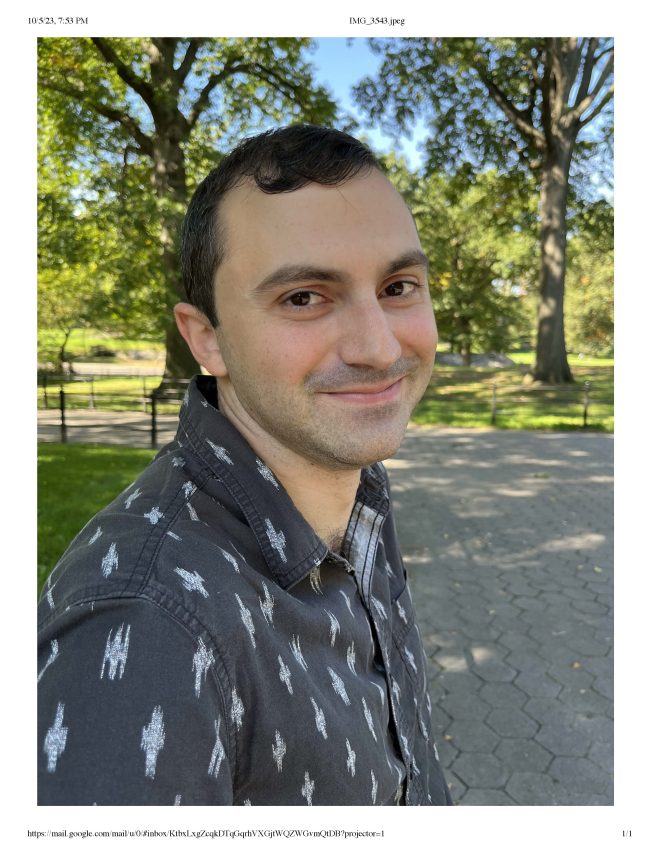
David Marino is a writer of Fantasy and Science Fiction. His fiction has been published in Lightspeed, Escape Pod and Beneath Ceaseless Skies, among others. He’s a graduate of the Clarion Writers Workshop, holds a Master’s Degree in Writing from Sarah Lawrence College, as is a member of SFWA. You can find more of his work @davidmarinowrites on instagram or bluesky, or at davidmarinowrites.com
About the Narrator
Mike Boris

Mike Boris is an IT consultant and freelance elearning narrator living just outside of Indianapolis, Indiana (USA) and has read for a number of story podcasts including Escape Pod, Pseudopod, The Drabblecast and The Starship Sofa.
Along with his elearning work, Mike has put in some time on the radio and dabbled in commercials, but that’s work. Reading stories out loud…like he did for his four, now grown boys, is truly a delight.
You can find Mike online at MikeBorisAudio.com, or listen for his other work on your story podcast of choice.
