

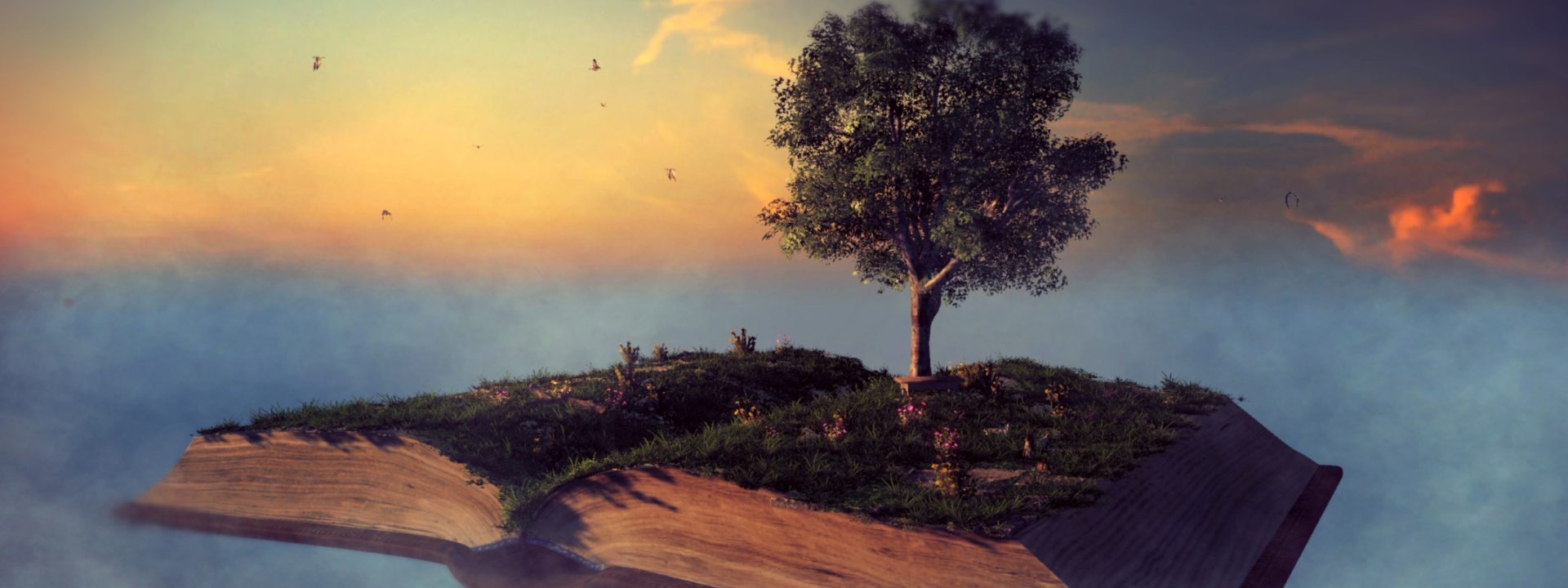
Cast of Wonders 705: Trade you for the Beans
Trade You For the Beans
by Kehkashan Khalid
When Mammy drops me off to school on the hottest day of the year, no one bullies me. I stand there in the schoolyard, letting her I love yous wash over me, and when she drives away, I close my eyes.
It’s okay Asghar, I tell myself. They’ll punch you a few times, and when you don’t react, they’ll get bored. You can handle that.
But nobody comes. I stand there like an idiot with my eyes closed and my sweaty fingers gripping the spine of Grammy’s copy of Lord of the Rings until the bell rings. Nobody reads such old stories anymore, and they especially don’t carry them around like bricks. But I don’t want to download my stories into a cube that’ll summarize them for me. I like the rustle of the pages and their musty scent and holding them impossibly open with a thumb while I eat and read at the same time–Grammy would turn over in her grave, Asghar! Mammy would say. Grammy liked her books to look all perfect even after they’d been read. Too bad she left them all to me, who likes to make notes in the margins and leave big ol’ mango stains on the pages. It’s like they hold a little bit of who I am. And they’ll hold it long after I’m gone. It’s the closest to magic I’ll ever get.
I cross the schoolyard and am about to go inside when I spy a boy standing with his face against a tree trunk. His mouth is moving. He turns away from the tree and stands there, eyes downcast, looking forlorn. When he looks up I quickly turn away, heart beating fast. He has cracks all around one eye like he’s made of glass and someone has punched him. It explains why the bullies haven’t come for me today.
Grammy had an opal ring she wore on her knobby little finger till the day she died. In her will, she told Mammy to leave it to me. I’m not allowed to wear it yet because it’s true chandini which is very expensive, but sometimes Mammy will let me open the little velvet box it sits in and stare at it. The opal is like a portal. A round milky stone, with blue green smoke swirling in its depths. That’s how the boy’s face is. One moment it’ll be milky white and smooth, and then bursts of teal will dance across his face like he’s underwater. The other boys are already calling him seaweed. I try not to stare because I don’t want him to think I’m making fun of him like the others, but when he’s not looking at me, I catch a few glimpses. Later, when Mr. Beanie is teaching us geography and picking his nose when he thinks we’re writing, I glance up at the boy and he gives me a small smile.
The next day, Opal-boy is talking to the trees again. And I know they’re not replying. Trees don’t talk. I want to tell him as much. But then I think of all the people who told me to stop carrying Grammy’s books around. I didn’t like them very much, and I want Opal-boy to like me. So I walk over to him and stand there politely, waiting for him to finish his communion. A squirrel scampers out of the hollow of the tree and runs squeaking and scolding up the branch. Opal-boy falls back onto the grass in shock, and laughter bursts out of me in ribbons.
“Well, what did you expect? You’ve been boring him for the last five minutes when he was trying to get some extra sleep.”
Opal-boy looks thoroughly confused but doesn’t reject my offer of a hand to help him up. I struggle to find the right words to ask him what he’s been doing.
“What are you talking to the trees about?”
“Oh,” he dusts himself off, “I’m asking them if everything is alright back home.”
I don’t understand how a tree could help with that, but he sounds serious so I nod politely. And when Laith comes around out of boredom hoping to engage with his new favorite punching bag, I step forward and confront him instead, and get the black-eye I had escaped yesterday. Opal-boy rushes to my aid, cradles me and asks me if I’m okay. Somehow getting the black-eye feels worth it when you’re treated like a hero.
After school, I take Opal-boy home. Mammy is cooking five mini-daigs at the same time, enough to feed the entire neighborhood, in our stone kitchen which is the biggest room in the house. It is where I do my studying, where Babby reads the paper, and where everyone gathers for a bite and a word. The smells of cinnamon, bay leaves and star anise rise from the steam escaping the top of the giant metal pots. My mouth waters.
“Mammy, this is…” I begin and then stop, because I realize I’ve been calling him Opal-boy in my head.
Opal-boy ducks his head in a semi-bow, “Nabataat. But you can call me Boota.”
Mammy turns around and though she gives him the widest smile and welcomes him to her table, there’s a crease between her eyebrows and her eyes turn down at the sides which tell me she’s sad, though I don’t understand why.
“Nabataat, how are you settling in?” She gives him a plate of fragrant rice heaped with smoked-eggplant-yoghurt. She asks him if he wants chilli oil but he declines with a quick shake of his head that makes his colors flow from left to right.
“It’s different here, and I miss my family, but my foster parents are so kind and it’s nice to make new friends.” Boota gives me that small smile again, and when I look at Mammy her eyebrow crease has deepened, and she’s looking at me with tears in her eyes. It’s the second time today that I feel like a hero.
The next day, at the schoolyard, I try talking to Boota’s favorite tree.
“What does he ask you?”
The tree stays silent and somber. The squirrel pokes its head out and gives me a death-glare.
“These trees don’t talk.” Boota is looking at me sadly, his face greener than ever.
“I know.” I see the sadness on his face deepen and make my tone kinder. “I know.”
I think about Boota’s sadness all throughout double-history while Ms. Hind drones on and on about Jang-e-Bahar, what Babby says the politicians call The Blooming. A war over resources that’s been going on for years.
These trees don’t talk, he’d said. It’s right when the teacher raps me on the knuckles for not paying attention that it hits me. Boota said these trees, because he knows of trees that do talk!
I’m still thinking about talking trees at the dinner table when Babby announces that we’re winning the war. Mammy grunts and says, there are no winners in a war. Babby acknowledges her words but still he insists, it’s better if the war ends already. To which Mammy responds, better for whom? And that makes Babby quiet.
I sit at his feet later, making chess pieces fight even though I don’t have a board, and ask him about the war. He tells me excitedly about the fighter jets and space probes and all the other technology that he builds miniatures of in his cramped little office. It smells so different from mammy’s steamy, spicy kitchen: all metal, varnish, and burning plastic. After his enthusiasm is spent I ask him other questions, like who we’re fighting against. He tells me it’s just a fight for survival. The Earth’s been running out of resources for the last few generations, and finally all the governments are working together to scour the skies for fuel and new worlds. He added, ‘don’t worry, we’re not making a home in any of them’ jokingly, ‘we’re just finding new raw material to bring back here, and make Earth a better place’.
Babby picks up a little glass case that has a small piece of wood in it. “You see this? This is the fuel we found on Shajaristan, a little green planet just off the second star to the right.”
He winks. I laugh. Neverland. A planet of promises.
“That little green planet saved ours.”
I think of Boota’s earnest face, flooding with blue-green color, “They wanted to save us?”
“I mean, it took some persuading. And some fighting. The fighting is mostly over now, just some guerilla resistance that still needs to be squashed. But we’re helping them too. There were a lot of problems going on there, tribal feuds and local superstitions holding them back. Watch this.”
Babby takes out the little piece of wood and places it on a heating rack.
The little piece of wood burns bright and starts screaming. I look at Babby in alarm, thinking that he will grab the tongs and pick it up. But he has his arms behind his back and he’s rocking back and forth on his heels. He smiles at me,
“Do you see all those cool colors? This little piece of wood here is a far better fuel source than anything we have on Earth. One log can power whole ships and there is so much of it on that planet. I’m planning to order more.”
I look back at the burning piece of wood emitting hot pink flames. He can’t hear it screaming. But I can. It’s how I know we’re not borrowing anything, we’re stealing.
I think about the screaming wood all night. I’m thinking trees that can scream when they’re dead, must be trees that could talk when they were alive.
“You’re quiet today,” Boota asks at lunch as we load butter chicken onto Mammy’s handmade naans and eat.
“I’m fine.” I lie.
“Your eyes are red.”
“I’m fine.”
“Do you want to come over to my house today?”
I shrug.
After school, I follow him down the winding path. He hums and skips and fingers something in his pocket. I follow him morosely, still thinking about the wood from Boota’s planet and how Babby had made it scream.
Boota’s foster parents are elegant people that live in a majestic house. Marble floors, grand staircases, and alabaster statues everywhere. When he wanders in he looks like a little forest spirit lost in a mansion. His foster-mammy has a smooth face like she’s been carved out of amber, and her hair is jasmine-oiled and pulled into a tight, low bun. Gold bangles adorn her wrist and gold hoops dangle from her ears. Her sari looks like something Mammy would like but could never afford.
“We’re so happy to meet you, Asghar. It’s great to know Bayout has made new friends,” she smiles kindly at him and he seems to glow a little.
“His name is Nabatat,” I point out, “Boota for short.”
The foster-mammy looks scandalized. Boota looks stricken. Foster-Babby explains.
“We suggested a name that sounds more local, to help Bayout fit in.”
I glance at Boota. If he wanted the new name, he’d have told me the new name. Besides, no amount of name changing is ever gonna make that opal-face fit in. But I can see Boota wants to please them so I keep my mouth shut.
The conversation shifts to lessons and school and his foster parents beam when Boota explains everything he’s learned like he’s a giant sponge that has soaked up everything. I can’t imagine how he holds all of that information in his tiny little head.
“Why don’t you and Bayout go play with his cube for a bit.” Foster-Babby smiles at Boota. “I downloaded some of those new games you told me about.”
Boota looks excited so we jump up from the table even though our food is half-finished.
“Ah-ah-ah,” Foster-Mammy shakes a finger, “You have to change your clothes first, Bayout. Auntie-nanny is waiting to do the laundry.”
A chubby, wrinkled woman in a white sari is waiting at the side of the room, holding a fresh pair of clothes. Bayout hesitates. His hand reaches for his pocket the way I clutch Grammy’s Tolkien books. Foster-Babby’s face falls. He and Foster-Mammy exchange a look. Then they put a hand each on Boota’s shoulders and take him to the side of the room. I see him draw something round and green like shiny peas from his pocket and display them on his palm.
I can only hear snatches of what they’re saying.
“Not again, Bayout…”
“Sweetheart, you have to let this go…”
“If you give these… we can get an upgrade on your cube…”
“It’s so much better for you to focus on your future…”
“Of course, of course not! We would never ask you to throw them away…”
Eventually I see Boota take a deep breath and nod. He puts the green peas in the velvet lined box Foster-Mammy is offering.
He doesn’t seem to be thinking about it while we play games on his cube. But I can’t stop. I’ve been scammed enough times in video games to know that you don’t just hand over stuff because other people tell you to. I just don’t know how to tell him that without being intrusive. Eventually, I can’t take it anymore and I blurt out.
“Why’d you give them up?”
Boota turns a puzzled face towards me.
“Why’d you give up your beans so easily? My Mammy gave me a velvet-lined box to put my Grammy’s opal ring in, just like your foster-mammy did for the beans. I know they’re important.”
Boota shrugs. I feel like shaking him.
“Why’re you accepting that fake name that doesn’t belong to you? Why’re you listening to them trade your old life for this one? Why don’t you hate them?”
Boota looks troubled now, and the colors on his face are swirling super fast.
“I know there’s lots of wrong things happening,” he replies carefully, “But they’re good people trying to do a good thing.”
“It’s not a good thing, Boota. It’s not!” I don’t know why I’m getting so worked up, but my body feels like it’s committed to all the anger and won’t step back now. I’m getting flushed in the face and I realize I’m shouting. I pick up my bag.
“I have to go.”
Boota looks at me worriedly, like he doesn’t know what to say. I run and run and run till I’m back in Mammy’s kitchen, breathless.
“Are you going to tell me what happened?” I’m curled up in Mammy’s lap. I know I’m almost too big to be held like this, but we’re trying to stretch it for as many years as we can. I wipe an angry tear and she cuddles me tighter until my body betrays me and I’m bawling.
“Boota doesn’t know! He thinks I’m his friend, when I’m just the enemy!”
I tell Mammy about the perfect foster parents, how they took his green beans away, how they gave him a new name. I even told her how he talks to the trees. I can’t quite bring myself to talk about the screaming wood.
“Where Boota comes from, people live for centuries. And when they die, their seeds get planted again, and turn into these trees that carry all the memories they ever witnessed. You think people like that haven’t seen a few angry mobs with burning torches before? They’ll survive this.” Mammy strokes my hair, “And you’re not his enemy, Asghar. Right now, you’re his only friend.”
The next morning, I feel terrible. I crawl downstairs, play with my breakfast, ignore Babby talking about the news and all the new wood he’s going to order, and then run all the way to school. Boota is sitting in a corner of the schoolyard, playing with the grass. I notice he just runs his hand over it, doesn’t pull bunches of it out like I would if I was bored. I walk over to him and sit down. I nudge him with my shoulder.
“So… who are those beans, anyway?”
He looks up at me, eyes rounded in surprise.
“My Mammy told me your people turn into seeds when they die, and then you can plant them again.”
Boota nods, his eyes brightening, “Those are my parents.”
I try not to show how shocked I am. It sounds awful to me to be carrying the seeds of your dead parents in your pocket, but Boota doesn’t seem to realize what he’s said.
“One day, I’m going to plant them, and tell them of all the new things I’m learning.”
I try to smile, but I’m not sure I can.
“Why did you get so upset yesterday?” Boota asks me, timidly.
I sigh. “I was ashamed. We’re attacking your home, taking your things. I don’t want to be your enemy Boota, I want to be your friend.”
“You’re not my friend, Asghar,” he says and I breathe and nod, willing to accept whatever accusation he wants to throw my way, but he continues, “You’re my brother. Do you think I could be enemies with someone I’ll remember forever? You’re a part of my story. One day I’ll be a tree and I’ll always carry the memory of you.”
I tremble. My eyes are pricking and I don’t want to cry. Tears slip out anyway.
“It hurts me when I think I can’t go back to the forests,” Boota wipes the tears from my eyes, “But we, Shajaris, think of living as a colorful experience. Sadness, joy, grief, pain, is all part of it. In death, we try to archive it for as long as we can. Besides, we’re very adaptable. We didn’t always live on Shajaristan, you know. We took root there, and now we’re here.”
I sniff. “That’s kind of cool.”
Boota gives his trademark small smile.
“You know, our trees carry memories too?” I think back to all the geography lessons. “They can’t talk but they carry scars that say what they’ve been through. And they get these rings on them, that store part of the air and soil so you know exactly what happened around the tree that year.”
Boota looks amazed. I feel momentarily proud of our lame not-talking trees.
“And let me show you something else.”
I reach into my bag and pull out the giant, dog-eared, Lord of the Rings. “This is a book. Its paper is made out of trees too. And then we can tell stories on it!”
Boota’s eyes become two round orbs, teal color rushes into his face, swirling this way and that. He reaches out and touches the browning pages, his fingers tracing the text, stopping to circle the stain left from one of Mammy’s curry-rice bowls.
“Wow, so you guys have your own kind of memory trees.”
Half a second later, he asks,
“How do you make a book out of a tree?”
I squirm, thinking about the one time we did that paper-making activity in school, beating bark to a pulp and soaking it till it fragmented into blobs of cellulose. I tell him about it, a little. He’s shocked and distressed. I wonder how he’ll feel if I tell him Babby burnt a little piece of wood that probably came from a replanted Shajari hoping to carry their archive of memories forever. I can’t bring myself to say it at all.
There’s a bunch of Shajari-wood in a sad heap in Babby’s office now and I feel like it’s looking at me whenever I pass by and the door is open. Babby watches the president on the television telling everyone how pleased he is to have signed new deals with our neighbours, and how the war is over, and the Earth secured for future generations. At night, I dream of the Shajari-wood standing over me with long drooping eye sockets, ropes trailing down its entire body like a mummy. It opens its mouth and a long moan comes out, an endless cry of misery and pain.
I wake up sweating, and I can’t stop thinking about what Boota said.
“We didn’t always live on Shajaristan, you know. We took root there, and now we’re here.”
I pull the blanket over my head, stick my feet out, put a pillow on my forehead and none of it helps. So I drag myself out of bed and sit down near the window. The moon is bright outside and the trees rustle gently as if exchanging nighttime whispers.
What if everyone has it all wrong? Us humans, dumb and impulsive as always, thought we were saving Earth, except we were paving the way for an alien invasion. I imagine breaking the news to Babby.
And then I think about Boota. Misunderstood, talking to silent trees, with a crack over his eye where Laith had punched him. He’s barely fitting in as is, news like that would make it even harder. He’d be labeled and hated. And from what I had heard of the Shajaris so far, they were far better than humans. We could learn a lot from them. I think of how passionate Mr. Beanie gets, jumping up and down, when he’s talking about deforestation. Maybe it wouldn’t be such a bad thing if the world was overrun by forests.
The next morning, I can’t eat properly thinking that Babby might burn the Shajari-wood like firewood. I push my food around the plate and worry Mammy.
“Hmm. You never say no to my food, Asghar, what’s going on?”
“I feel sick, Mammy.”
“Do you want to stay home from school?” she asks gently.
“No!” I jump up, startling her, “No… I have a bunch of important lessons today.”
All the way to school I think about the Shajari-wood. I can’t let Babby burn it. I bounce on my toes in nervous anticipation as I wait for Boota to come to the schoolyard.
“I need your help with something.” I tell him when he finally arrives.
After school Boota comes over. I’ve spent the whole day planning how to sneak the wood out but when I get home it’s all much simpler than that. Mammy and Babby are both not home and won’t be for a while. The door to the office is ajar.
“Okay, we can’t take a lot, we have to be careful.” I wave my hands as I pace around the living room. “If we take all of it, they’ll know it’s gone.”
The key turns in the lock. They’re home. I grab Boota’s arm and shove him into the office ahead of me.
“We have to do this really fast and really quietly.”
We pick up the thinnest pieces of bark we can find, tuck them under our arms, and slip out the backdoor.
Boota asks the wood if it would mind being stewed and soaked. Once he nods at me, I dump it into the hot water.
“It’s eager,” he says, “It despaired of surviving. We’re giving it hope.”
We sit in silence until the paper mush is ready to be poured into a bucket. Then we rinse and clean the stewed bark and flatten it before mixing it into a vat and using a mould and deckle to make the pages. The sun is going down when we finally hold five dry pages on a piece of cloth. Boota beams.
“Now you can write on them, and archive your story a new way.” I hand him the pages, “We can even make more later. Just don’t show anyone what we did.”
Boota grins and holds a finger to his lips.
I nod. I watch him run down the road back home, clutching the five pages to his chest.
It becomes an after school ritual. Steal some bark from Babby’s office, talk and eat while it stews, and then make fresh paper that smells like a rainforest. Eventually, Boota has enough to write a Lord of the Rings of his own, if he wanted. We steal some needle and thread from Mammy’s room and sew the pages together. I can see he’s written on many of them, written and sketched and scribbled. I’m dying to read it, but I also want it to be his private thing, his connection to his past that no one can sever, so I don’t ask.
But a few days later he comes up to me and hands me the book himself. He’s beaming so hard his face is bursting with green color.
“Are you sure, Boota?”
“I want you to read it!”
Feeling special, I take it and put it in my bag, planning to read it during recess. We walk to homeroom thinking all is right with the world.
Towards the end of history lesson I raise my hand and ask for a lavatory pass. Ms. Hind gives me a look but doesn’t stop me. By the time I’m making my way back to the classroom, the bell has rung, and almost everyone has left. When I step inside the classroom, I see something that makes my blood go cold. My bag is unzipped. Laith is holding Boota’s book.
I know from experience that panic only excites him further, so I stroll in casually. I don’t want to give him any reason to think the book is special.
“Next class is in five minutes.”
“I know, I just want to read this first.”
“We’ll both be late, let’s go. The next teacher will be coming in any minute.”
“Oh, threatening me with the teacher, huh? I guess you’re right, we should go.” Laith turns to pick up his own bag. He unzips and begins to stuff the book between his other books. Punch. Stuff. Punch. I can see the pages creasing and bending, fighting to stay alive. My stomach prickles like someone is tickling and pinching me at the same time. My fists tremble. I suddenly feel like I understand completely how Grammy felt when someone messed with her books.
“I’ll keep your little diary. Maybe I’ll read it out loud to the other boys after school.”
Something comes over me, a rage that blinds me to every other sensibility. I lunge for Laith. He’s so surprised, I manage to knock him over. Desks and chairs crash as we both go flying, along with our bags. Laith scrambles up first, reaching into his bag for Boota’s book. He runs towards the window, waving it in his hands. I chase him.
He holds the book over his head and I jump desperately, too short to reach him. I bump against him, he stumbles against a desk, just as the next teacher enters the room. She sees me push Laith down, sees his head hit the edge of the window, a little trickle of blood bursting forth from his forehead. She doesn’t see the book spinning, spinning out the window. It flies over the grass and lands in the pond. I lean my hands on the windowsill, ready to climb out.
“Excuse me, Mister. Don’t you dare move.”
I know we’ll get detention. I couldn’t care less. The book soaks in the grimy pond scum and water, breaks into pieces, and dissolves.
I think of a thousand things I can say to Boota, but none of them are adequate. The truth is, he was wrong about us. We are bad people. Just like all the other dumb, impulsive, belligerent humans, Laith and I had destroyed something beautiful. I hung my head. It would be worse if Laith saw me cry.
After school, I avoid Boota. I run all the way home. I don’t even speak to Mammy when she knocks on my door with a plate of biryani and mangoes.
I pace all evening. How am I ever going to make it up to Boota?
In the middle of the night, when tireless crickets chirp outside, I pad barefoot to Mammy’s room. I open her chest of drawers, where she keeps everything valuable, and take out a small velvet lined box. I turn to leave and gasp. Mammy is sitting on her bed. She clicks open the light.
“You wouldn’t be stealing would you, Asghar?”
My shoulders droop.
“I did something horrible, Mammy. I have to make it up to Boota.”
“So you’ll give him Grammy’s ring?”
Somehow she makes it sound wrong, like I’m trying to buy Boota off. I get defensive.
“I ruined something precious of his, I’m going to give him something precious of mine!”
“An easy way to make yourself feel better.”
“But… what’s the harder way? I mean, the right way?”
“You’ll think of something. Close the drawer on your way out.”
The sun is barely out when I run towards Boota’s house. I’m so intent on my running that I don’t even see Boota walking towards me. I smack into him and we tumble downhill like a pair of pennies.
“Oh my god, Boota, are you okay? I’m so sorry, I’m so sorry!”
I help him get up, holding his shoulders, knowing my sorry is for more than just the fall.
“I’m fine, Asghar.”
“Boota, I did something terrible.”
“I know what happened.”
“You do?”
“Yes.”
“If I hadn’t jumped up to stop him, if I hadn’t…”
“You shouldn’t blame yourself for Laith’s behavior, Asghar. Just like you shouldn’t try to hold yourself responsible for everything other humans are doing.”
He’s looking at me sternly. It’s my turn to be wide-eyed and clueless. I realize I’d been thinking of everything Boota questioned as something he didn’t know. But perhaps it meant he knew some things better than I did.
“Boota I want to help you get your parent-beans back. I have a plan.”
Shyly, Boota holds a box forward. It’s the box his foster parents put his real parent’s seeds in. He’d already got them back!
“I thought about what you said. I talked to my foster parents about it and they agreed that this is something I need to hold on to.”
I hold Boota’s hand, and we run to the school yard. Under the tree that doesn’t talk, we dig into the soft earth. He hands me one seed, and holds the other one. We place them reverently into the ground where they come instantly alive, wriggling deeper into the soil. Green shoots burst out of the soil the moment we pack it in. Stalks unfurl, growing faster and taller than anything I’ve ever seen. Leaves bloom, catching errant dewdrops that refract the sunlight. We stand under the glow of Boota’s parent’s blooming. It’s the closest to magic I’ve ever been.
About the Author
Kehkashan Khalid
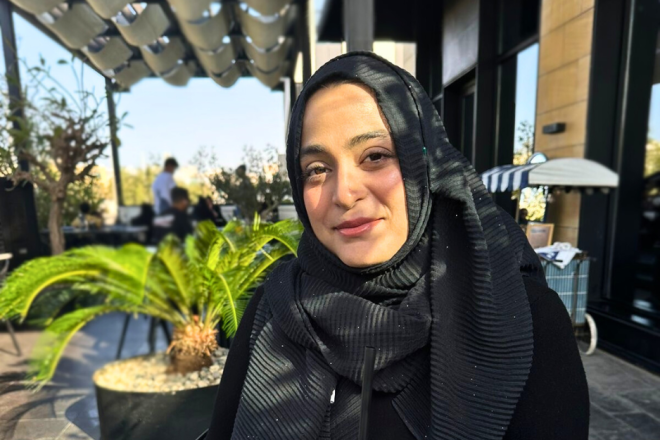
Kehkashan is a Pakistani writer, artist and mom of three based in Jeddah. Her work has appeared in Lightspeed, Fantasy Magazine, Translunar Travelers Lounge, and several anthologies. She is a slush reader at Clarkesworld, editor-in-chief at Tasavvur Magazine and an ex-librarian. Her other hobbies include painting, playing Padel, collecting board games and inspiring kids to love books. Find out more at www.kehkashankhalid.com or follow along at www.instagram.com/kehkashanspeculates.
About the Narrator
Bill Carson
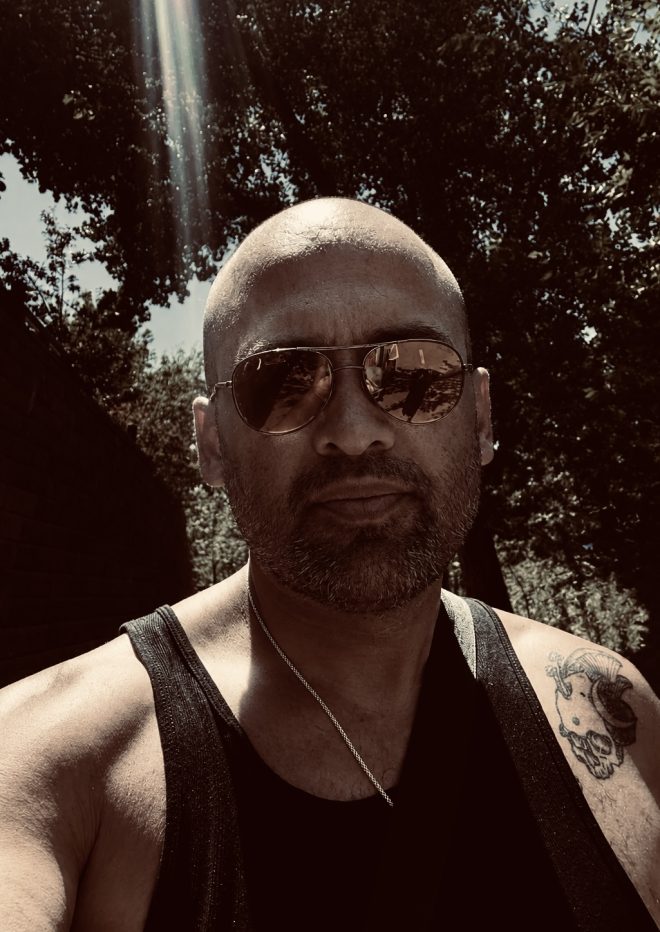
Bill has heard from friends for two decades that he should be in voice acting. He has done narrations and voiceovers for coursework in his academia, and in various training resources and programs in his professional career in local government. He is a husband, father, cook, writer, gamer, and musician.
