

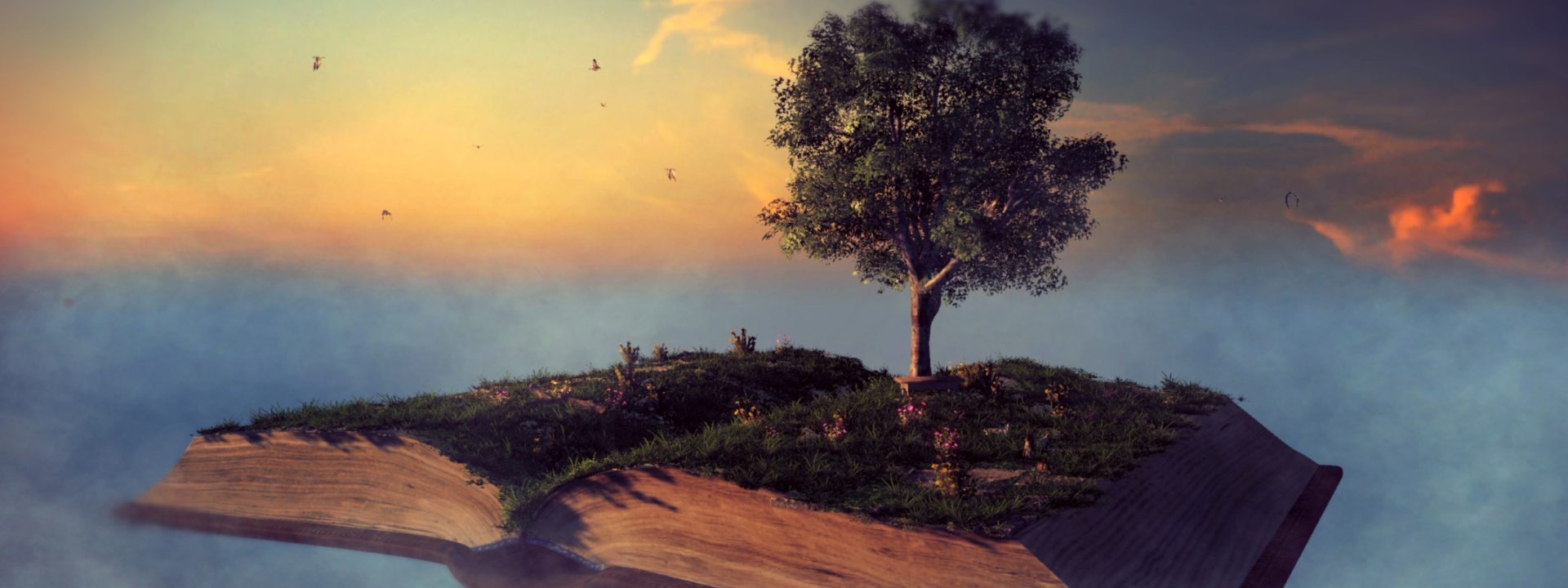
Cast of Wonders 704: The Fourth Hero of Ouroboros
The Fourth Hero of Ouroboros
by Erin Keating
The scholar travels with books on her back and tales on her tongue. The Charlatan King had tried to claim the books with flames and her tongue with threats, but she’d saved both by slipping from the city. Only the moon saw her go.
For weeks, she has walked from the gleaming glass of the capital out into the farther reaches of the Fourth Kingdom of Ouroboros, where the world feels emptier, wilder, older. In each town along her journey, she calls herself only the scholar, because to speak her true name would summon kingsmen armed with false accusations.
So, the scholar walks and, unbeknownst to her, the librarian waits.
The Kingdom of Ouroboros is fated to fall over and over, but each time it does the failing king hides the books and rewrites the history so that standing on the precipice feels like the first time. But he cannot rewrite the land itself. As the scholar leaves the village of Phelia, a wooded hamlet in the heart of farm country, she can read the history that has been relegated to myth. Between the flowering fruit trees, the ruins of centuries-old colonnades are swathed in scarlet beans and butterfly berries. Statues—some headless, some limbless—weep moss and cobwebs. The orchards have reclaimed the capital of the Third Kingdom of Ouroboros.
Farmers tip their hats to the scholar, wrapped as she is in the rough brown vestments of a traveling monk. If the farmers discover the books in her pack, they will think they are holy texts. They are, in a way. All stories are a kind of divinity.
At last, she sees a glass-clear lake spilling across the horizon. At its center stands a single statue: a bare-breasted woman wielding a shield and a scale. The statue, unchanged except for its fresh robe of lichen, tops the drowned golden dome of the Third Kingdom’s High Court. Beneath the rippling surface of the lake, the watery court gleams with algae-spotted glamor. Long-tailed fish swish in and out of the broken doors like plaintiffs pleading their case. In the three centuries since the Third Kingdom’s collapse, the land has reclaimed this place of theft.
The scholar charters a little dinghy and paddles with all the grace of one who has only ever read about boats. The sleeves of her borrowed vestments snag on the oars. Two sizes too big, they were meant for Fortin: a scholar broader, and braver, and better than her. The scholar slops her way out to the center of the lake, past the fisherwomen and courting couples, until she reaches the statue. The scholar places her finger upon the scale. With the groan of long-rusted chains, the balance shifts slightly.
She pulls the newest of her stolen books from her pack. This book had cost Fortin her teeth, her sight, the use of her strong legs. It should have been her: in monks’ robes that fit, with a voice brave enough to do what needs to be done. But the kingsmen had caught up to Fortin on the third of three thefts. The scholars were left with only one option, one so insignificant among them that, in a city of glass with eyes always watching, she could slip out unnoticed. The fate of the kingdom rests on the scholar’s slight shoulders.
For, each time Ouroboros has fallen, a hero had been born again from the depths of time to depose the king and usher in a new era. The scholar has journeyed here—to the place he was last seen—to summon him back.
Ouroboros has need of him again. She has need of him.
The memory of Fortin’s face, bruised beyond sense, blurs the words on the page. Fortin would not have been afraid. The scholar’s hushed voice shakes with shame as she begins to read.
“During the fall of the Third Kingdom of Ouroboros, the Corrupt King had bent the law of the land to his whims. Town courts across the land, and indeed the highest court of the kingdom, saw their judges silenced, arrested, and punished when they tried to hold the king accountable for his crimes, until there were no judges left but the king himself. The Hero of Ouroboros, born now a third time, stood in the capital to face the king in his high court. The king scoffed at the poor man before him, who could not afford the high price of justice. But just as the king called for the Hero’s banishment, the Hero worked magic older than Ouroboros itself.
“‘I will flood this court,’ he decreed, ‘with a single drop for every innocent person you have punished.’ Water began to seep up through the stone, rising and rising until the king and his guard were drowned and a lake, clear as glass, had spread around the High Court, all the way out to the horizon. When at last the water had settled and the lake had grown still the Third Hero was nowhere to be found. This marked the passage from the Third to Fourth Kingdom of Ouroboros.”
The scholar closes her book and listens. She waits for the gurgle of lake water, for a stranger’s voice, for the crackle of old magic. But there is nothing: only her pounding heart and forlorn face looking back up at her from the water.
Fortin’s recitations used to make the athenaeum windows rattle with applause from their peers. The scholar never recited. She had been content to simply congratulate her friend as she stepped off the podium. Fortin’s was the kind of voice Ouroboros needs now: one powerful and certain enough to reach through time itself.
“I’m so sorry,” the scholar whispers. She rows back to shore.
Among their den of tomes, the librarian looks up from their work. The chronicles of the Fourth Hero of Ouroboros shine with wet ink before them. The kingdom has need of a hero once again, and this hero’s journey is well underway. It will not be long now until she arrives.
The scholar walks on, back stooped by books and tongue laden with stories. There are fewer towns in this part of the kingdom, fewer travelers on the road. That is just as well. The Charlatan King has fashioned himself into a hero of old, warped the tales until there has only ever been one kingdom of Ouroboros and it has never fallen. So many people choose to believe him. She will never understand that: the choosing of ignorance. Unsure of who she can trust and what false stories she may hear, she is grateful for the solitude of the road.
The fertile farmland yields to soft, spongy ground as she nears the coast. The air stings with salt. In the distance, waves curl like a beckoning finger. The surrounding shore would have been tamed once, but now it grows wild with heady flowers and overripe fruit. Stone houses burst with greenery, spilling out into the cracked, cobbled streets. Bright-plumed birds call and wing through open courtyards. Shards of stained-glass crunch under the scholar’s sturdy boots.
This is Oratorio, the capital of the Second Kingdom of Ouroboros. The land tapers to a jagged point jutting out into the water. Perched at the edge of the jetty, stones and scorched timber pile in ruin. The charred remains, still smoldering some half-millennia later, are all that is left of a long-gone king’s pleasure palace.
The scholar braces herself. Among this desolate place, perhaps her voice will be strong enough to call the hero home. She hikes down the narrow jetty. The rocks slick beneath her boots. Despite the salt air, the old beams weep with the sickeningly sweet stench of rot. The place, forgotten by all but the scholars, is still dying. Only the ceaseless sea can grant it mercy now.
Out on that sliver of rock, the wind buffets the scholar. She folds herself small as she inches along toward the bronze statue bowed at the very edge of the world.
The figure of a bull, head bent low in a charge, looks as though he would have plowed through the center of the pleasure palace. It is the only thing recognizable from her book, though a green patina flecks his hide. The salt air has eaten away at its horns and snout, leaving speckled holes among metal that had once been worn smooth by worshipful touch. The scholar curls up against the crumbling plinth of the bronze creature. She folds herself over her second stolen book to shield it from the sea spray.
When Fortin is healed—she refuses to imagine a world in which her strong friend doesn’t heal—the scholar will bring her here. She can almost see it: Fortin, with her arms spread wide and fiery hair whipping in the wind, shouting her true name to the sea.
The scholar pulls all of that hope down into her belly, where Fortin says one’s voice is the strongest. She begins to read.
“At the fall of the Second Kingdom of Ouroboros, the Greedy King cared only for his own amusement, glutting himself on delicacies and wines, while his people starved. He emptied the kingdom’s coffers, taxed the poor until they had no coin to call their own, and bestowed young women as favors to his rich and powerful friends. The citizens petitioned the king to return control of their lands, their purses, their daughters, but he refused to hear them over the raucous clamor of his never-ending feast.
“That was when the Hero of Ouroboros, born now a second time, battered down the towering doors of the pleasure palace. He delivered the citizens’ petition to the Greedy King with a sword to his throat. ‘Return all that you have stolen,’ he decreed, ‘or else this place will burn until the end of time.’ The King heard the Hero—how could he not, with the Hero’s blade pressing into his throat? Yet he refused.
“‘You speak of stealing, but everything you see before you is mine,’ the King laughed. So, the Second Hero of Ouroboros set the endless wine aflame. A firebird flew forth, its shrieking caw sounding destruction. It winged through the palace hungrily, consuming all it touched, save for what the Greedy King had stolen. Once the palace had burned down to its foundations, the Greedy King and his courtiers only ash, the firebird launched itself into the sky, bursting into a shimmer of golden stars.
“The stolen girls—spared from the fire and the smoke—searched the desolate grounds for the Hero. But he had vanished with a seaborne wind. So, the stolen girls carried the dead king’s treasures out into the kingdom where the citizens reclaimed their livelihoods, and the girls reclaimed their lives. This marked the passage from the Second to Third Kingdom of Ouroboros.”
The scholar closes her book. A sound rises, and she prostrates herself in greeting the returning Hero.
“Welcome!” she cries. She has done it. For Ouroboros, for the scholars, for Fortin, she has done it. Her voice has reached someone.
But a moment passes. Then another. In the stillness, she raises her head, takes in the unchanged scene. The sound is only the wind whistling through the holes in the bull statue. Brushing the ash and sand from her vestments, she begins to pick her way back toward the coast.
The scholars should have known better than to send the quietest among them to summon the Hero. She has studied all of the stories—knows them better than most—but they are so much safer in her heart, where she cannot bungle them in the telling with her feeble voice.
As she stumbles back onto the relative safety of the cracked cobblestones, the scholar hears a noise again. Not the wind. Not the waves. Someone sings a tune the scholar remembers from her childhood, bawdy words passed with winks between her mother and aunts. The song echoes off empty halls and abandoned courtyards. The scholar chases it. She trips over the uneven ground but keeps running with bruised knees and scabbed palms. It dances away from her: crumbling doorway to open window to lengthening shadows. She follows it all the way to the road that leads out of Oratorio into the wild hillsides. The setting sun blots out the figure climbing the switchbacks.
“Please, wait,” the scholar whimpers. Then, the loudest she has ever managed, “Wait!”
The figure stops—then approaches. An older woman hunches before the scholar with an overflowing foraging basket on her back.
“Who are you?” the woman demands.
“I am a scholar. Are you the Hero of Ouroboros?” The scholar kneels before the woman. But the lady swats at her.
“I have no need for scholars, or heroes, or kings, or much of anybody for that matter.” Her face is sun-leathered as a dried citrus, and her arms tremble as she leans against her walking stick. Still, she holds her head high, “Why are you looking for a hero?”
“I—the kingdom is—do you not get news of the capital?” The scholar stammers.
The lone woman gestures to the cliffside and the stillness that spills all the way out to the sea.
“The Charlatan King—he is driving the kingdom to ruin. Scholars and artists are imprisoned, anyone who questions him is banished. You are—fortunate—if these tales have not reached you.”
The lady huffs. “I understand banishment better than most. But you still didn’t answer my question. Why are you looking for a hero? Can’t you do something yourself?”
“I—I am doing something,” the scholar protests. She doesn’t understand this lady’s frustration: this is all the scholar can do. After the miles she’s walked, after the secrets she’s carried, after the sacrifices her friends made, the scholar supposes she had expected some gratitude, if not meager compassion. “Finding the new hero is doing something.”
“Well, then,” the old woman hoists her foraging basket on her back and continues her hike. “I wish you better luck than you had here!”
The scholar is left alone in the settling darkness.
The librarian sets down their pen, laughing as they always do at advice unheeded. They consult their map. It is old, but that is no matter. The shape of the land remains unchanged, despite the borders drawn and redrawn in some distant throne room. The new hero draws nearer. She will be disheartened after her latest endeavor. They had best be prepared to meet her.
The scholar hikes until the sea dissolves into a dream. The coastal cliffs of Oratorio seem to crack and crumble as she heads west. The land bleeds red with sunsets over sand.
The scholar had never needed to hear the sound of her own voice, unlike so many of her peers who would have withered without the sustenance of their speeches. But as the days between encountering another soul grow longer, hotter, she begins to tell herself stories for company. She speaks tale after tale until she feels like the heroes of Ouroboros walk beside her. She speaks to Fortin heedless of the distance between them, telling her of her journey thus far, stopping only when the wind whips sand into her mouth. She pulls up her vestments so that they cover all but her eyes and treks on.
Beneath a smirking desert moon, she wanders off the edge of the maps produced by the Charlatan King’s cartographers. There’s a little sigh as it happens—the wind breaking against the crossed border as the scholar steps beyond the long-told lie. On the other side, the desert night shines brighter. The stars spill across a rippling velvet sky in chaos of their own making. They do not need to conform to the King’s stories and patterns. Just when the scholar thinks she sees a shape in their splendor, several of them shoot off in a scattering of light.
Too soon, dawn rises at her back. The heat of the day urges her toward shelter among the sandstone hills. Scattered boulders, pocked with oddly shaped crevices, promise sweet shade. The scholar crawls up the side of the rock and peers down into the dark. The hole echoes beneath her like a parched throat.
The heat, even this early in the day, makes the scholar’s motions slow and viscous, like squelching mud she distantly remembers. With her blood pumping like sludge, she lifts her heavy hands to inspect the stone beneath her grip. A pattern of repeating lines carve the rock into neat little rectangles.
Teeth.
Hope springs up in the scholar like cool water. She moves with the determination of one whose quest is almost at an end. The heat and the journey behind her are nothing to the short distance ahead. She climbs higher up the hillside until the desert stretches out below her, and she understands.
The ruins of Laudius, the burial ground of Ouroboros’s founders, reveals itself in the shifting sand. The boulder where she had sought shelter: the face of one of the founders, the statue’s head separated from its body, now a sand-smoothed column. Dozens of others lie in pieces, crumbled by weather and time. Hands clasped around the hilts of broken swords. Sandals planted firmly on the ground, the rest of the founder missing. Each commemorated the final resting place of the Kingdom of Ouroboros’s founders who had written the land into being.
The same place where the First Hero of Ouroboros had confronted the Cruel King.
If there was ever a place to resurrect the Hero, surely this was it.
The scholar falls to her knees, scraping against the hard sandstone. With shaking hands, she holds her third and oldest stolen book aloft like an offering. Her throat is parched. Her vision is blurry. But she reads with all her strength.
“When the Kingdom of Ouroboros fell, the Cruel King had corrupted the words of the Twelve Founders until their magic had grown twisted and poisonous. The Twelve Founders had stitched together their disparate peoples into a whole, and with every word from the Cruel King’s mouth those threads unraveled until blood fought blood. With each new law, ruling, and spell, the Cruel King elevated his own people above all others. The Kingdom of Ouroboros collapsed beneath its weight.
“The Hero of Ouroboros, born of the very land itself, marched to the gleaming splendor of Laudius, for though the Cruel King had trampled on the Twelve Founders’ magics and laws, he lavished praise on their memories as he likened himself to them.
“‘What would the Twelve Founders say if they could see how you have torn Ouroboros apart to suit your own whims?’ the Hero demanded of the corrupt King.
“‘I have not torn Ouroboros apart,” the Cruel King proclaimed. ‘Ouroboros is stronger than it has ever been.’”
“‘We shall see if they agree.’ And with those words, the Hero raised the Twelve Founders from the very tombs beneath their feet. They were not dressed in resplendent robes and gowns, as the Cruel King had memorialized them, but in the traditional vestments of their peoples. The Founders pointed at the Cruel King and with voices unwavering chanted, ‘Shame. Shame. Shame,’ until the Cruel King’s mind began to unravel like his magic. He ordered the memorial at Laudius destroyed—the pillars torn down, the monuments toppled—but still around Ouroboros echoed, Shame, until the Cruel King fled the Kingdom altogether, if only to escape that haunting cry. As word of the Hero’s actions spread, people sought him in the ruins of Laudius, but he had vanished, returning to the ground from which he had come. This marked the passage of the First to the Second Kingdom of Ouroboros.”
The scholar waits with held breath. In the shifting sands of the valley, she searches for movement, listens for the tell-tale rustle of words working on the world. The sun beats down on her, making the air ripple liquid in the heat.
Beads of sweat fall from her forehead to the sandstone drop by drop. Each one rings of her failure. No Hero of Ouroboros will be coming to save them, if one ever even existed at all. She had abandoned her friend’s bedside, trekked across the kingdom, born strain and solitude, all for a fantasy.
Ouroboros will fall, as it has always fallen. And she will have done nothing to stop it.
Until a cool shadow falls over her.
“That was a wonderful story,” the librarian says. They had listened to the words echo through the sandstone valleys, across the mountains, along the shores, through the farmlands. Ouroboros had sighed at the telling of itself.
“Are you the Hero of Ouroboros?” the scholar asks.
The librarian shakes their head slowly, long locks tumbling down their back. “No, but I have witnessed every fall and rise.”
“Will you help us?” The scholar fixes them with her gaze, and in it, they can see all the miles walked, all the stories told.
“Of course. But first let us rest, for you are weary, and I will tell you all I know.”
The librarian takes the scholar by the hand, and steps sideways into the place between. The sunlight falls away as they step into the cool shadows of the rocks, but then they keep stepping until they land in a cavernous hall. The scholar’s eyes widen at the sight of it. Beneath the vaulted ceilings, rows and rows of books stretch down labyrinthine corridors. The still air smells of must and earthen magic.
“Where is this place?” the scholar breathes.
“When the Twelve Founders wrote the Kingdom of Ouroboros into existence, they wrote a library to hold all the stories of their peoples—past, present, and future,” the librarian says. “Once, everyone knew how to reach it, but that knowledge died with the Cruel King. The library is everywhere, if only one knows how to look.”
“Is there a book here that can help me resurrect the Hero of Ouroboros?” The scholar’s eyes hungrily search the towering shelves.
The librarian thinks of the last person who asked them that and smiles to themself. “Come.” The librarian turns down one of the massive aisles toward a door that seems miniscule in comparison. Inside, an office sits with scattered papers, a half-completed manuscript on the desk, and a decanter of fresh spring water. The librarian eases the scholar into a well-loved armchair.
“Please, the book. I don’t have much time.”
But the librarian simply pours her cup of water, so cold that the tin begins to sweat. Thirst wins out, and the scholar gulps down the water until the red stain of heat begins to fade from her face.
“There now,” the librarian smiles. They have not had someone to smile at in a long time—their face rejoices at the gesture. “You have come to me asking about the Hero of Ouroboros. Tell me, of which ones do you wish to hear?”
The scholar’s face wrinkles in confusion. “There is only one Hero of Ouroboros.”
“By my count, your stories speak of three.”
“But they are all incarnations of each other, born of the land when the kingdom had need of them.” A look passes over her face, a panic known only to scholars: uncertainty. “Aren’t they?”
“Tell me, don’t you think people are much less likely to resist tyranny if the stories all say that a mythical hero will save them from it? Don’t you think it would make them more inclined to wait?”
“Can’t you do something yourself,” the scholar murmurs the words of the solitary woman on the shore of Oratorio.
“Imagine how much more fragile the kingship would be, if the people knew that the first Hero of Ouroboros was representatives of the Twelve peoples who marched the populations of whole cities to the Memorial at Laudius to tear it down in protest of the Cruel King’s actions. Or that the second Hero of Ouroboros was a group of women who infiltrated the Greedy King’s pleasure palace to sow dissent among his most loyal supporters. Or that the third Hero of Ouroboros was a young couple and a host of legal scholars who took the Corrupt King to the High Court for his abuse of the law. Imagine if the people knew that the power to tear down and rebuild Ouroboros has always resided with them, as the Founders had intended.”
For a long while, the scholar says nothing. She pours herself another cup of water. The only sound in the room is the quiet rise and fall of her throat. Then she stands.
“And the fourth Hero?”
“I think that all depends on how widely you can share the knowledge you have just acquired.”
A moment of hesitancy. A slight glaze in the eyes. The librarian has seen it all before. Every person who has wandered into the library looks like that at some point, after learning that they have more power than they had been taught. That the magic of Ouroboros resides in them.
But then her expression sharpens. “Could you please show me the way out? There are some people that I need to speak with.”
The librarian shows her how to step into shadow and then take one step further into the place between. Between two pillars of light, they watch her stride across the streets of the gleaming glass capital.
They settle back at their desk, dip their pen in their inkpot, and begin to write the next chapter of the Fourth Heroes of the Kingdom of Ouroboros.
About the Author
Erin Keating
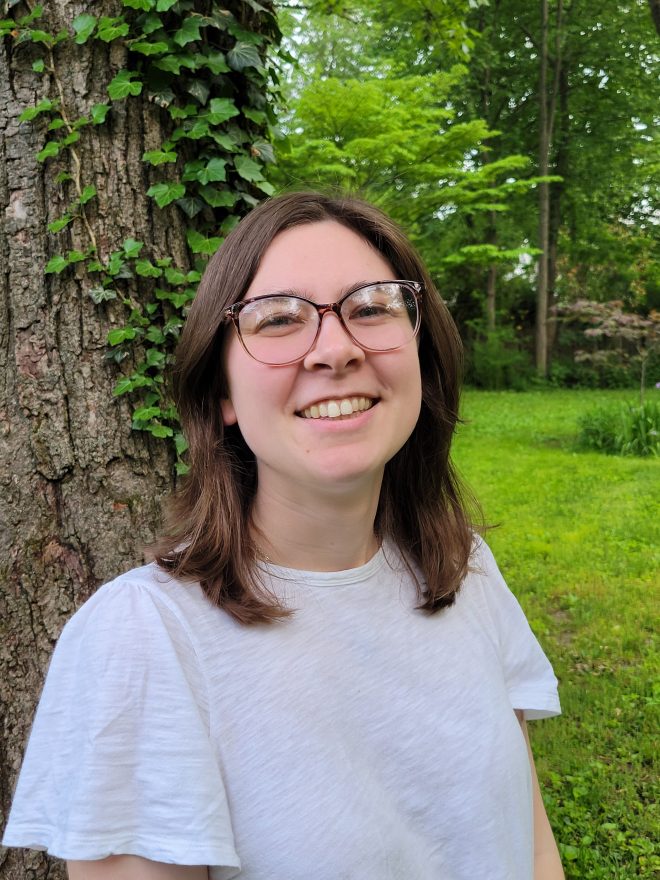
Erin Keating has earned degrees in creative writing, literature, and literary history which she tries to put to good use by writing stories about stories. Her work has appeared in PODCASTLE, TALES & FEATHERS, and EMBER among others. When she’s not reading or writing, she’s dabbling in whichever hobby has most recently caught her attention. Find her online at www.erinkeatingwrites.com.
About the Narrator
Stephanie Malia Morris

Stephanie Malia Morris works in a bookstore by day and a library by night, which gives her access to more books than she can possibly read over several lifetimes. She is a recipient of the Octavia E. Butler Memorial Scholarship Award and a graduate of the 2017 Clarion West Writers Workshop. Her short fiction has appeared or is forthcoming in FIYAH, Apex, and Nightmare. She has narrated short fiction for StarShipSofa, Far Fetched Fables, Uncanny, and all four of the Escape Artists podcasts.
