

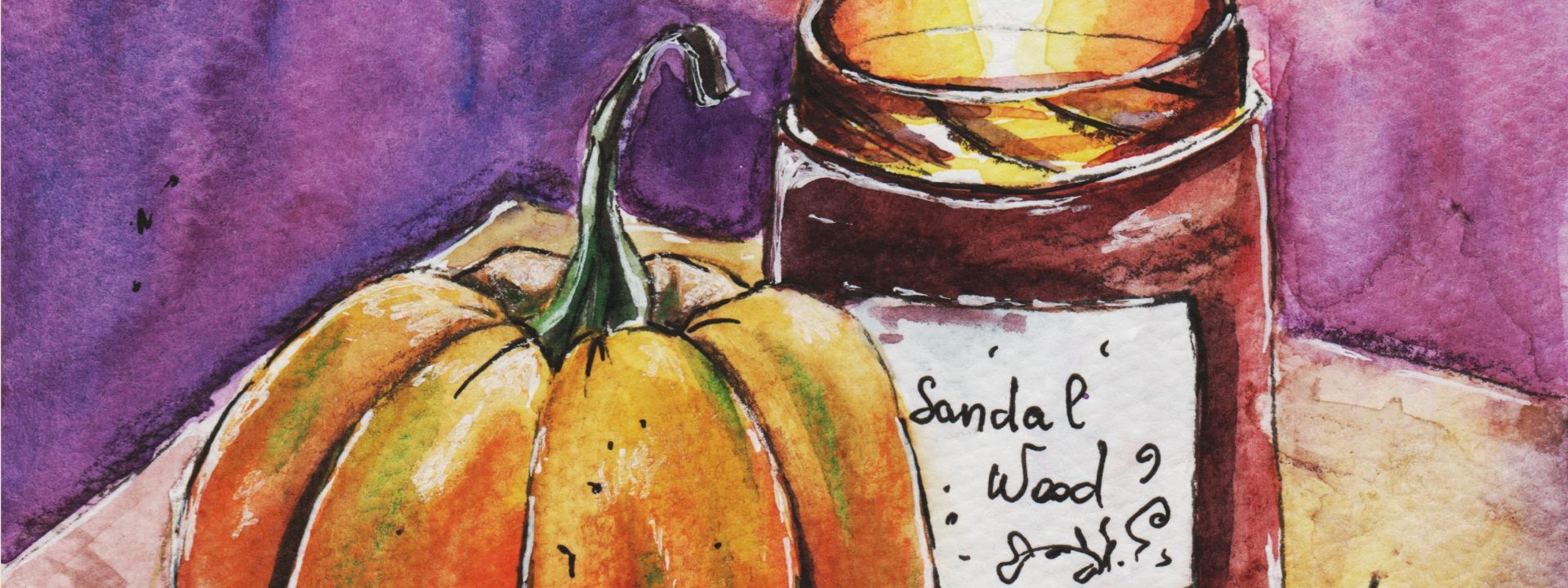
Cast of Wonders 709: The Last Halloweens, The Halloween After
Show Notes
Image by Майя Щедрина from Pixabay
The Last Halloween, The Halloweens After
by Daniel Roop
The COVID Halloween of 2020 had been the saddest, weirdest Halloween of my life. Every year prior to the virus, the streets of our neighborhood had been packed sardine-tight with face-painted toddlers, plastic-masked elementary-aged goblins, and harried, hustling parents bumping into one another, apologizing in a huff, weaving through the crowds to keep up with their candy-crazed children.
But the COVID year had been different, with less than half the people out, and everyone keeping their distance. Mrs. Jenkins, who always gave out full-size candy bars, wouldn’t let the virus ruin her tradition, but she wasn’t taking any chances. She’d had her husband construct a long, makeshift chute from their upstairs bedroom window to the end of the driveway. Kids would line up, Mrs. Jenkins yelling at them to stay six feet apart, their bags stretched open at the red plastic slide’s end while she’d sent Twix and Snickers tumbling down. Mr. Pittman, 50 years old at least, white, and balding, had donned a Lakers jersey and stood on his front porch. He’d made kids stand near his mailbox, while he’d tried to shoot Twizzlers and Whoppers into their bag, yelling, “Kobe!” before each inevitable miss. As they’d picked up their dented candy, he’d yelled, “Good hustle! Way to rebound!”
It had been a surreal night, but I remember it fondly, since that was the last year my older sister Quinn took me trick-or-treating. I was eleven, she was seventeen, and she took me only because my dad had insisted. Mom was in the hospital, no visitors allowed thanks to the virus, and Dad, while determined I wouldn’t miss the holiday, was beyond busy with his plumbing business and keeping the house running. So, Quinn drew the short straw, which she was gracious enough to remind me of only a few times that night. I dressed up as Rey, and despite Quinn’s occasional grumbling, she did an amazing job fixing me up with that impossible Jakku hairstyle. I was Rey, and Quinn was, in her words, “Rose’s put-upon sister who’s too cool, and too busy, and too mature, to dress the hell up for Skittles.”
The following Halloween, when I was twelve, I dressed as Medusa, wired rubber snakes poised around my head, daring any mortal to look upon me, and Quinn was a ghost. When I was thirteen, I was a witch—you can’t go wrong with the classics—stringy gray wig, sickly sallow face-paint, fake mole on my nose, and Quinn was a ghost. At fourteen, I was Michael Myers beneath a movie-replica quality mask—from the first film, of course—toting a plastic, fake-blood-streaked butcher knife, slow-walking in my mom’s old Doc Martens, passed down to me when she died in the COVID year, and Quinn was a ghost. In 2024, when I was fifteen, I was dealing with some body-image stuff and didn’t feel like being looked at, so I was an inflatable dinosaur in one of those ponderous costumes, which was a mistake as I couldn’t see a thing through the mouth and tripped and fell three times before I made it to the end of our street. Mrs. Jenkins saw what was happening and helped me cut a hole in the mouth’s mesh so I could navigate better. So, I was a dinosaur who could walk at least a little, and Quinn was a ghost. At sixteen, I was Nekuzo Kamado. I wanted to build her box, put it on wheels, and roll around, but I ran out of time, so I just wore the Nekuzo costume, and Quinn—you guessed it—was a ghost.
Which brings us to this year, Halloween 2026, the year I turned seventeen, and I decided at last to go as Quinn, which was an impossible task, because how can you capture Quinn in just one costume? She did everything; she was everything. Cheerleader, debate, dance team, soccer star, student government president, lead singer in her own local punk band, nursing home volunteer, homecoming blah blah blah—it’s exhausting just to list it, and I can’t imagine how someone lived it. Watching Quinn bulldoze and dance her way through life had been equally inspiring and intimidating. How does a little sister live up to that? She was the radiant extrovert to my anxious introvert, and despite our differences in temperament and age, we were close. Truthfully, I was thankful for the span of years between us, as it’s lessened direct comparisons from other people. But inside, I obsessed over all those comparisons myself, both while she was here, yes, and even more so after she was gone. By 2026, even though my self-perceived inadequacy in her posthumous shadow still eats at me, five plus years was enough time for me to conceive of the Quinn costume. Plus, it seemed appropriate, given the circumstances surrounding that Halloween, regardless of how much anger towards her I carried with me into that night.
So, this year I was Quinn. I patchworked together a costume with my hair temporarily dyed hot pink, wearing her neon orange soccer shorts and cleats, a pale blue scrubs top from the back of her closet, purple pom-poms in one hand, her black guitar and old student government lanyard around my neck, and more. It was a lot to carry. Stepping out the front door that crisp October evening, heavy amber sun dropping low in the sky, I was Quinn, as much as I ever could be. I was Quinn. And Quinn was a ghost.
She met me at the bottom of the driveway, dressed in a similarly mish-mash fashion, floating a few inches off the ground, invisible, inaudible, to everyone but me, on this one night of the year she could still appear. She tilted her head and grinned. I could see the mailbox through her body. “Not even gonna ask permission first? Just gonna take my stuff?” I could hear her voice in my head as clearly as if she were speaking aloud. And I’d learned that first Halloween after she left that I could simply think back at her.
“I didn’t know I was going to dress like this until I did. Besides, it’s not like you’re gonna need it.”
“Ouch, but okay, fair enough. Still, if anyone else could see me, too, this would suck. We’d look ridiculous together.”
“No worries—I’ll just look ridiculous on my own.” I swept my arm through her to prove a point, to reinforce her insubstantiality. It felt cold, like reaching into a grocery store freezer.
“For real, though, Rose. Why this? No new anime bullshit caught your fancy this year?” She knew something was off before she asked. She had always been able to see through me, as easily as I saw through her since she’d left.
“It just felt—right, I guess? Needed? I don’t know. Whatever. You know what I mean.” I turned away and started walking down our hill, and she drifted alongside me.
“You seem pissed.”
I was, of course. The prior Halloween, our trick-or-treating finished, we’d ended up in our backyard, sitting and hovering respectively around our fire pit, my Nekuzo robe pooling on the dying grass, sparks floating up into the cloudless black. As midnight neared, and Quinn was about to disappear as usual, she’d said, “Next Halloween will be our last, y’know.”
Stunned, terrified, I had asked her why, but before she could answer, she was gone. I’d carried that weight for an entire year, sleeping fitfully, digging through any ridiculous ghost lore I could find online, going down countless paranormal YouTube rabbit holes, and had come up with nothing. I’d tried to talk to her every day, thinking as hard as I knew how to think, and again, nothing. So, I had trudged through that year, restless, pissed, confused, resentful—name the emotion you don’t want to have, and I’d carried a metric ton of it.
“No. I’m fine.” My lips were a tight line. My jaw could have turned coal into diamonds. I’d promised myself for an entire year that I wasn’t going to cry.
“Dog in a flaming room fine?”
Quinn’s knowledge of memes, of any new pop culture, stopped in 2020, which is when she’d left me for the first time. That COVID Halloween, after she’d led me around the neighborhood as Rey and too-cool-for-everything-Quinn, we’d returned home to find a note from Dad, saying he’d gone to the hospital to see Mom, which seemed weird to me, since I knew visitors weren’t allowed. Quinn had stared at the note for a long time, her face hardening, as she said, “They’re allowed for one reason.”
She hadn’t explained but had sat me down at the worn kitchen table to sort through my candy. She’d made me follow the same rules our parents always had—I could eat five pieces that night and save the rest for later. Those nights at the table every Halloween, as I separated fruit-flavored from chocolate, BlowPops from Tootsie Rolls, were excruciating joy—before me, an abundance of everything I wanted, while still wishing I could have more. As I started to peel the wrapper off my first choice, Dad had slumped through the door, gray-faced, and told us the news. I didn’t eat a single piece of my candy that night, or in the days that followed.
That next week, before Mom could be laid in the ground, Quinn had quarantined herself in her room the minute she realized she couldn’t taste the strawberry Starburst she’d stolen from me. Who knows where she caught it? School was still virtual, and activities were cancelled. At occasional neighborhood gatherings we’d all kept our distance. Dad hadn’t brought it in, as best we could tell. Just one more place where life didn’t provide a single, satisfying answer. Just one more slice of uncertainty, just one more hospital room, unvisited, occupied by someone I loved. And before Thanksgiving could come around, one more funeral, one more closet full of clothes that would go unworn.
“I’m fine, I said.”
“Okay. If you say so.”
We walked and floated in silence for a while. Our prior post-COVID Halloweens had been torrents of talking, me catching her up on a year’s worth of my life. She’d assess what I told her and then gush out an info-dump of all the big-sisterly advice she couldn’t give me any other time. I told her, the year I was twelve, how I’d stood paralyzed in Wal-Mart, staring at what felt like endless options on the shelves. I told her other things, everything. She’d say:
“It depends on what kind of flow you have, really. We can figure that out. But you want tampons for soccer or swimming, for sure.”
Or:
“Okay, so that’s what he said. But how was he looking at you when he said it?”
Or:
“Rose, we need to talk about your hair.”
“My hair is fine!”
“It’s brittle as shit. The ends look like dead twigs. What conditioner are you using?”
“Dad’s buying this stuff in a green bottle that—”
“No. Hell no. Dad has no idea what to buy. Put this in your phone. The brand you want is—”
I have note after note on my phone of her recommendations. The best and worst science teachers in our high school. Novels I should read. Albums I have to listen to. How to flirt with guys. How to flirt with girls. How to avoid someone clearly looking for drama on social media. How to break up with someone kindly. How to survive being broken up with.
Twelve months’ worth of life and gossip and guidance in six hours, at most.
It was wonderful and impossible, and I always wanted more. We’d try to find a way to meet on other days, or earlier in the day each October’s end, but Halloween dusk seemed to be the only border she could cross to get to me.
I walked quickly past Mrs. Jenkin’s house, not looking towards her front door where she stood oohing over three tiny Pixar-bedecked kids, their open bags outstretched. I ignored her waving at me over their heads.
“What’s up? She not giving out full-size bars anymore?” Quinn twirled in the air, floating forward, looking back at Mrs. Jenkins dropping candy into the bags, said, “No, those are full-size. Are we swinging by there on the way back?”
“I don’t know. Maybe.” But we weren’t. I loved Mrs. Jenkins, but every Halloween she always stops me for a moment to talk about how wonderful Quinn had been, how much she missed her, how unfair it was she was gone, and on and on. It wasn’t the cheeriest conversation in the best of times, and that night, I knew I simply couldn’t handle it.
We turned onto Aspen Lane, heading south, and I slowed my stride once we were out of earshot of Mrs. Jenkins.
“So, okay then, if you say you’re fine, you’re fine, I guess.” Quinn left a pause for me to fill. I didn’t fill it, and so she continued. “Well, kiddo, there’s a year to catch up on. What’s been going on? Guys? Girls? School drama? Parental nonsense? Still writing?”
“Stuff. No. Kinda. A little. Always, since then. Yes, but not well.”
“Wanna elaborate on any of that?”
“Not much to say, really. Nothing that interesting happened. Just a year, y’know. You were sixteen once.”
“I was.”
She paused her forward movement, hovered in place reminiscing to herself, and despite my anger and confusion and fear, I stopped with her. I watched her prior days move like weather over her face. She grinned.
“That was a good year. First at state in debate. Jacob Moore. Wrote my first decent song. Killed the SAT. A really good year.” She shook her head, resumed floating along our route. “Seventeen, not so much. I mean, it started well. But, y’know.”
“Yeah. I do.”
We ambled slowly through the neighborhood, leaves crunching under my feet, under the feet of the irrepressibly living children, streaks of brightly colored costumes like tiny comets blazing across lawns. Quinn tried again to make conversation. And tried again. And again. I didn’t say much in return. A few hours passed in mostly awkward silence. The sun lowered, then lowered some more. The moon, a silver scythe, hung in the darkness overhead.
“How’s your novel going?” she tried.
“About a word at a time.”
We’d reached the far back end of the neighborhood. She stopped in midair, the two of us alone for the moment at a cul-de-sac where the only two homes had their porch lights off. “Seriously, Rose, please. This is our one day. Can you please tell me about something?”
I’d tried as long as I could, holding back out of resentment and fear, but I finally broke, and whirled on her. “Can you please tell me anything?”
“What do you—”
“Oh, I don’t know, Quinn. Maybe about you dropping that bomb on me last year, maybe about this being our last night? Maybe that?”
She looked stricken. “I didn’t mean to leave it like that last year, really. I faded quicker than I expected. And I didn’t know how to bring it up again this year. I just—I wanted us to enjoy the night together.” She seemed genuinely remorseful. I didn’t care.
“That’s not good enough. Explain what’s happening.”
She floated, just above the asphalt, just out of my reach, moonlight illuminating and piercing the gray gauze of her form, but her face was as clear as it had been in life as she spoke.
“Do you remember what you asked me that first Halloween after I left?”
“Of course. I asked you where you’d been. I asked you what it was like there.”
“And do you remember what I said?”
“You said, I don’t have the language. I don’t have the words. I don’t know if the words even exist.”
“That’s right.” She looked at me like that was an answer. It was infuriating.
“Okay, so you don’t have the words to describe Ghost City or whatever. That’s not what I’m asking now. I’m asking you why you’re leaving.”
“I don’t have the—”
“No! That’s not good enough. Tell me your stupid ghost lore. Tell me all the convoluted rules that make you—”
“I don’t have—”
“No, Quinn! I said, no. You want to know about my year? Worrying about this has been my entire year. Every night, staring at the ceiling. Every morning when I wake up. Nothing but this. So, tell me something. Tell me why. Maybe it’s not even about ghost lore. Maybe it’s just your choice. Maybe you’ve decided that since I’ve turned seventeen, and that’s how old you are, how old you are forever, you figure you’ve taught me everything you can and now you think I don’t need you anymore, but I do need—”
“Rose, I don’t have—”
“No! Shut up and listen to me, Quinn!” I was a blubbering mess by that point, thankful no one was around because thinking wasn’t enough at that moment. I had to speak these words out loud. “Tell me which of these idiotic reasons you’re using as an excuse. Maybe there’s so many satellites in the air now it’s messing up the ghost vibes and you can’t hold your form, or maybe you’ve finally completed some earthly task you’d left undone. Maybe ghosts just have some kind of radioactive half-life that only lasts so long. So, which is it? Why the hell are you leaving me again, Quinn? I deserve to know.”
Ghosts can cry, it turns out. Her tears, gray wisps, floated upward from her face like smoke, into the night sky. She smiled through them.
“I don’t suppose I know what anyone deserves, Rose. But you are worth it.”
“What does that mean?”
“It means you are infinitely precious to me, to everything.” She paused, knowing she wouldn’t, couldn’t, give me what I wanted. “But I still don’t have the words.”
“This doesn’t make any sense.”
“Did it make sense when I left the first time?”
“You know it didn’t.”
“And it never started making sense in the years after, did it? It felt senseless when I left then, and when I’m going now. It will always, always, feel senseless.”
“I don’t want your stupid platitudes or philosophy or whatever. I just want to know why you’re leaving me!”
“I’m not leaving you, Rose. I’m just . . . leaving.”
By then I realized, though I’d missed it thus far in the dim moonlight, through the haze of tears, that Quinn’s edges were starting to fray and fade. She gestured towards my head, to my hot pink mane, said, “Your hair looks really good like this, y’know.”
“It’s the conditioner.”
“It’s the conditioner, for sure.”
We stared at each other. She looked down, then up at the moon, and said, “There’s this old Zen parable—”
“Jesus, Quinn, really?” Quinn had started reading Zen stuff when she was sixteen and I was ten, and she’d quote koans to me, which I didn’t understand at all, and which I’m convinced she didn’t understand either. I’m pretty sure she just thought it made her look smarter and more intriguing.
“There’s this guy being chased by a tiger—”
“At least this is more exciting than the one-hand clapping thing.”
“And he runs and runs and runs until he ends up at the edge of a cliff, and the tiger is approaching, so he tries to lower himself down the cliff, but it’s just a sheer drop. So now he’s holding on, hanging from this tiny outcropping and he looks up, and the tiger’s looming over him. He looks down, and it’s hundreds of feet to the canyon below.”
“I’m not sensing any ghost lore here.”
“And he looks to the side, and there’s a single, ripe strawberry growing from a tiny plant on the cliffside.”
“Is it a magic strawberry?”
“No more than any other, no. So—certain death above, certain death below. And he plucks the strawberry, and plops it in his mouth, and the juice drips down his chin, and he thinks, It’s delicious.”
She was fraying more, coming apart, rising like mist in the night sky. It was all happening too fast. Everything always happens too fast. There was still too much to say.
“Quinn—this is—it’s just wrong. It’s not fair.” I felt like a child again, clueless and terrified, raging over a table full of candy I couldn’t stand to eat, looking at my father’s ashen face, and later, at Quinn, oxygen tube in her nose, gasping to talk on our last FaceTime call, at this terrible thing that sneaks up on us all even though it’s always there in plain sight. I thought about everything I’d wanted to say to her for a year, and it all came out in a rush of snot and gulps and rekindled tears.
“Quinn, listen. There’s a world somewhere where you grow up and I grow up, and, and we grow up together, and we have daughters, right? And you name yours after some ridiculous punk singer, and I name mine Tannith, and we take them trick-or-treating together every year, and we hold each other’s hands and watch them laugh and run across yards, crunching through leaves, and they, they never have to dress up as each other, because that world is better to them than this world was to us. Somewhere there’s a world like that.”
“But not this world, Rose. Not this world.”
And then she was gone, rising, fading, into the cloudless sky.
I wiped my nose into the pompoms. How did I feel? I don’t have the words. I don’t know if the words even exist.
I walked back home, cleats clacking and scuffing on the asphalt, the streets now completely empty, every porch light snuffed out, the world silent. When I got home, I found a note on the front porch from Mrs. Jenkins. Sorry I missed you, dear. Happy Halloween. She’d left two full-size candy bars under the note. One for me, and—well—two for me.
I sat at the fire pit in the cool air, as October turned into November, with no flame burning, just the thin slice of moon casting down the most light it could.
I cried some more. I ate both bars.
They were delicious.
About the Author
Daniel Roop
Daniel Roop is a member of the Horror Writers Association and has been nominated for a Pushcart Prize for his work in Will Work for Peace from Zeropanik Press. His speculative fiction has appeared or is forthcoming in publications including Apex Magazine, Cast of Wonders, Flash Fiction Online, Factor Four Magazine, Dark Spores, Black Cat Tales, and Appalachian Places. He is a seventh-generation East Tennessean, and his favorite superhero is Kitty Pryde.
About the Narrator
Rosie Sentman
Rosie Sentman is an actor, voice actor, writer, singer, and all-around ‘theatre artist’ based in Boston, Massachusetts. By day, you can find them introducing grade schoolers throughout New England to Greek mythology through drama and comedy, or employing their background in disability advocacy in their position as a standardized patient; by night, you can find them writing academic articles and original fiction, or running lights and sound at an improv-comedy club in the North End. You can find them, and more information about their recent projects, at rosiesentman.com.
