

Cast of Wonders 699: Little Wonders 53 – Doomed Relationships
Petrichor
by Eleanor Lennox
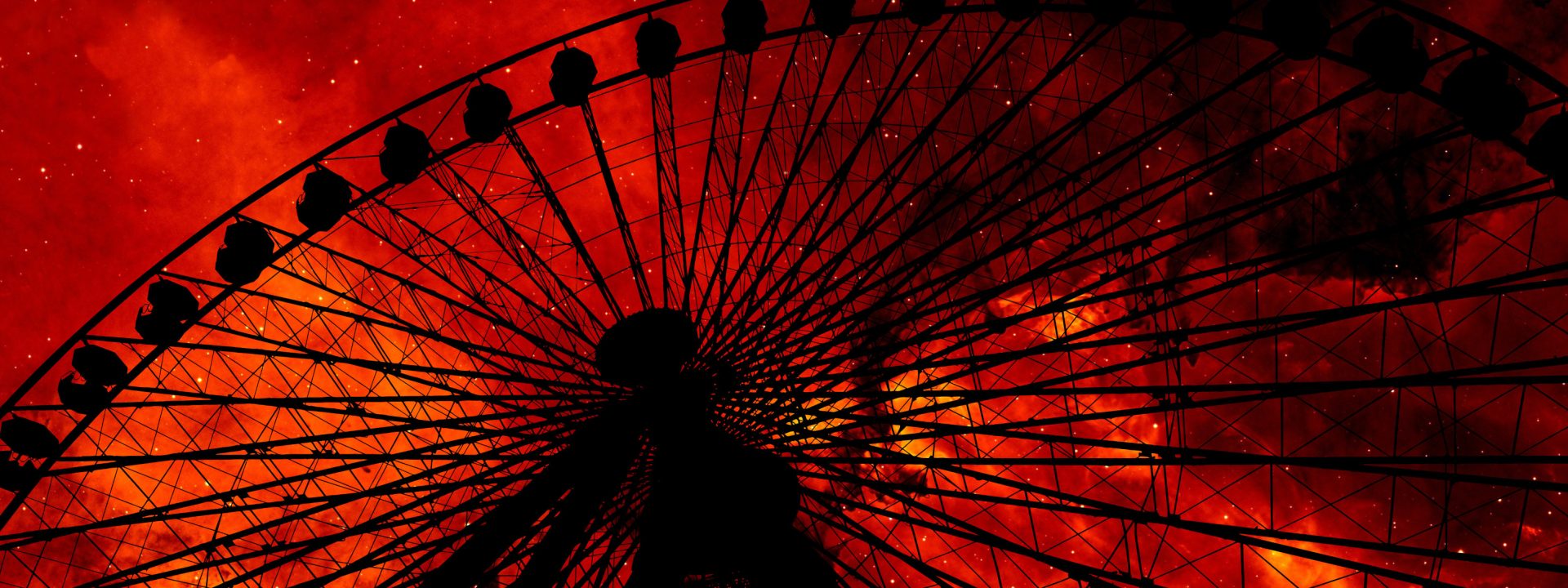
The golden hour had begun, that time of honeyed sunshine and veiled shadows. Painted horses raced in perfect circles, their eyes unseeing rubies. Blue ribbons flapped on pies and pigs, jellies and quilts, all those strange, forgotten miracles. Waiting for the Ferris wheel, I saw him: a boy almost a man, looking out to the forest.
I approached.
“You’re not from here,” he said without turning back.
“No,” I agreed.
“From Argyle?”
“From nowhere you know.” Be thankful for that.
Home was underground. Life was staying alive for a future our grandchildren would emerge to, not us. We were the lost generations, waiting out a radiation half-life of 76 years.
He bought me a lemonade, sour and metallic. We listened to the music of a fiddle, almost bewitching time itself. We danced.
“Tell me about where you’re from,” he said.
I smiled. “No, tell me about you.”
He wrote music, he said. His symphony was nearly complete. He called it Petrichor.
“‘Music is how we decorate time,’” I said. “Or I think that’s how it goes.”
It was just a little fair in a small forest town.
They warned us it was unremarkable. Not like the great fairs of the last century. They had such beautiful names. Magic Kingdom. Tivoli Gardens. Dollywood.
For those of us with money tucked away, sometimes there was a chance to go back for an hour or two, to those rare golden hours scattered through the timeline like diamonds hidden in rock. Here we could see the Old World. Run outdoors. Touch things that grew from the earth, touch skin kissed by sunshine. The one law: do not alter the timeline.
Even a girl like me was allowed to go back to a place like this. There was no harm anyone could do to the timeline here, now, in their last golden hour.
Tomorrow morning, the dam would break above this lonely town, and they would all be washed away.
“Enjoy tonight,” I whispered, my cheek against his shoulder. But he heard it as a warning. He pulled back and looked at me closely, eyes narrowing.
“So many of you strange people here tonight. Never once before,” he said. “Makes me wonder.”
“Don’t think about it,” I pleaded.
He locked eyes with me and read the truth there. I knew it in the lines of his jaw.
“I’m sorry,” I said.
He nodded and looked away. When he turned back, his eyes were bright and wet.
“You want to ride the Ferris wheel?”
At the top of the wheel, we kissed, and the whole world was in it.
Below us, the golden hour was ending, as it must.
Tomorrow I would be underground. He would be underwater.
Skyglow
by Leona Penrose
Shannon and Ami are sharing their first kiss as the sky breaks open. They are in the woods, sitting in the fort they built two summers ago, in what already seems like another lifetime. Each girl told her parents they were studying at the other’s house and took their bags and books into the forest to share in the magic of youth and new love.
Shannon opens her eyes first and stares in shock, thinking Ami is covered in blood. When Ami looks at her in equal horror and confusion, they realize that the world around them has turned an unsettling shade of crimson, the sky above them no longer filled with the first stars of twilight, but a deep blood-red gash whose light soaks everything it touches. They spend the night huddled together, watching the once-familiar firmament crack like a chrysalis and fall to earth, leaving behind an eternity of red.
After hours spent cowering in the carmine twilight, the two girls venture out from the trees to find their idyllic childhood suburbia transformed. Cozy bungalows and split-levels have been warped and stretched like taffy, turned into twisting towers and abandoned temples; land long-leveled by the process of urban planning now juts into tawny chalk-cliffs and claret-colored canyons. Whether their homes remain standing, neither can tell–if so, they have been changed beyond recognition. Of their families, there is no sign, nor of any other living thing.
The hue of the sky never changes, but the light waxes and wanes on a schedule neither girl can pin down; their phones are long dead, and the hours impossible to gauge. They have felt neither hunger nor thirst since the sky tore apart, but they do tire, lying down together in what shelters they can find.
At first, the girls steal cautiously through the newly unfamiliar streets, but they grow bolder as the hours pass. Shannon can’t help worrying someone will see them together, haunted by the echoes of cruel remarks, but she eventually relaxes into easy affection and unhidden embraces. Ami is the first to abandon her school supplies, dumping them out on the scarlet streets, but Shannon holds onto hers; even now, giving up her books seems unconscionable. But Ami laughs and bounds through the alien terrain, pulling Shannon along, books and all, into the caverns and spires she finds so they can explore them together.
Sometimes when Ami is asleep, Shannon will pull out her textbooks and stroke the pages, still pristine after endless miles of travel. She closes her eyes and imagines that she will wake up the next day to find herself in her old bed, with breakfast and the school bus waiting for her. Sometimes when Shannon is asleep, Ami will watch her profile in the darkness, listening to the sound of her breathing as it mingles with the wind through the empty landscape. She closes her eyes and imagines all of the new sights they will see together, what they will discuss and what adventures they will have.
After weeks—maybe even months—of their strange idyll, Ami begins to shine the same garnet glow as the sky. The colors are so similar that neither of them notice it at first, but when they settle in to sleep, they can both see that she now casts her own light. Ami is delighted, playing her hands over the walls of their temporary home to illuminate them. Shannon is terrified, sure that this cannot signify anything other than disaster. They hold each other through the night, but neither of them sleeps, albeit for different reasons.
In the morning, Shannon opens her backpack. She flips through the pages of her biology text, searching for the cause of Ami’s newfound phosphorescence, but there only ever seems to be more she has to learn. Ami leaves to follow her own winding footsteps, and comes back at dusk to see Shannon in the same spot as when she left, the textbook in her lap somehow twice the length it once was, with new pages materializing to answer questions yet unasked. Ami tries to make conversation, to recount her day’s adventures, but eventually gives up. Shannon keeps reading long into the night, until finally she collapses, curled around her book. Ami lies beside her and watches the shadows that her light makes with Shannon’s features; her glasses refract half-moon glimmers on the walls, and her long black hair shines a deep maroon in Ami’s glow. The sight makes her ache inside.
They continue on and on like this, Shannon lost in a book that grows longer by the hour, and Ami wandering in and out. One evening, Ami comes home and reaches out to touch Shannon’s shoulder but finds that her hand is nearly transparent. Shannon, roused at last from her research, cries herself to sleep, and Ami spends another night staring at the sky through the thin scrim of her arms. She is not tired, has not been in days.
In the morning, Ami draws the book out of Shannon’s unresisting grasp, and leads her back out beneath the red sky. It feels like they have journeyed for a lifetime in this place, but they have barely begun to walk before they come across a familiar stand of trees. The deer trails and paths have not changed, no matter that the land beyond them has become unrecognizable. They lie in the fort they built together, before they knew how fragile the world could be. They gaze up at the sky, their hands tangled between them.
Ami puts her arms around Shannon and whispers into her hair. “Not everything has to happen for a reason.”
In the morning, Ami is gone. Shannon stares at the ground where her best friend and first love once lay, and then up at the sky. There are no tears left inside her.
She raises her hands, and sees the first glimmer of light within them. She smiles and closes her eyes.
Even in Worlds
by Jenna Hanchey
I came unstuck in time again, and when I managed to grab ahold of something to anchor me, it was our daughter, in a future where she could exist. Her laughter snapped me into place within spacetime, and I opened my eyes to yours, full of concern about where I’d been. A haze of water arched behind you across the sky. She was making rainbows with the hose, spraying the water in just the right way against the sun to bring out the magic held so carefully within it.
Your eyebrow arched like the beam of water, asking without asking, allowing me to choose what to say about then, now that I was now. I looked away, following our daughter’s footsteps as they squelched in the mud she’d just created, leaving footprints that marked that she was real, she existed, she left an impact on the world around her.
Just like her absence did, in other spaces. Other futures. Other times.
My watching was answer enough for you, who knew where I went and when I went and what I saw and that I held it all within me, all the time, even now, even amongst the laughter. You slid your arm around me, seamlessly fitting into the curve of my collarbone, and laid your head against my chest. Both of our hands rested gently on the grass, lightly sprinkled by the hose as if cleansed anew by afternoon dew. Your presence always brought me peace, a depth of calm that’s impossible to do justice by words alone. And you always brought my senses back in alignment, grounding me.
You held me gently, and the land held me gently, and I held you both gently in return. Reveling in each breath, but knowing I’d inevitably get pulled back, once again, to a world where you’re gone, and she can never exist. Perhaps the one where your name got you stopped at the airport. Perhaps the one where citizenship was peeled back in layers until it took away yours. Where water grew tired of mistreatment and ebbed away from us all. The one where we failed to pass, our gestures a little too queer for such a normative world. Or the one where the contrast between the colors of our gently-held hands was punished for its breathtaking beauty.
Even in those worlds, I still carried this feeling with me. Of your head gently resting atop my lungs. Of my breath evening and deepening. Of listening to a little voice laughing as she plays with water and land and sunlight, releasing the magic woven into the fabric of the world.
Even in worlds where we never met, I can hold onto this: there is always magic, waiting to be released.
Host Commentary
Short and bittersweet, but I love that AnneMarie continues the work of the boy who died that she clearly loves.
Forbidden love freed by an apocalypse.
It was never going to end well, but at least it ended on their terms, not by bigots and phobics and Shannon knows that she will soon follow the girl she loves – wherever that may be.
I loved this one for it’s quiet moment of loving and being loved. A rare light to hold onto when, inevitably, the protagonist is pulled back to the hellish worlds that are so much more common. It’s a could happen moment, an aspirational moment, a hope giving moment that not EVERYTHING is terrible. In this day and age we desperately need those small glimmers of light: the knowledge that there IS good out there; that there is a better way; that it could be made better. And that’s something everyone should hold onto with all their might and do the work to make those glimmers more frequent, make the better world more of a reality.
About the Authors
Eleanor Lennox
Eleanor Lennox lives in New England, on a quiet hilltop where fog gathers, and animals linger. Her work has appeared in Flash Fiction Online, Radon Journal, Factor Four, and Intrepidus Ink, amongst others. Find her online at eleanorlennox.com or on Bluesky at @eleanorlennox.bsky.social.
Jenna Hanchey
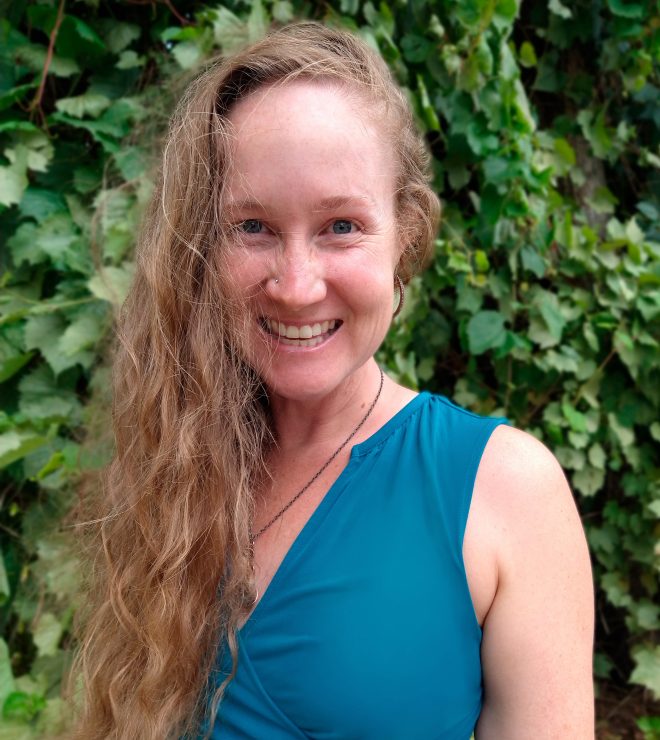
Jenna Hanchey (she/her) is a BSFA award-shortlisted writer, as well as poet, collage artist, narrator, and podcast cohost. Her research looks at how speculative fiction can imagine decolonization and bring it into being, while her fiction aims to support this project of creating better futures for us all. Her work can be found in Nature, The Sunday Morning Transport and World of Possiblities, among other venues. Follow her adventures at www.jennahanchey.com.
Leona Penrose
Leona Penrose spends her days writing, daydreaming, and occasionally teaching math to teenagers. This is her first professional publication, although she’s been subjecting friends and family to her stories for many years. She lives in the Pacific Northwest with her partner and their three children (two cats and a baby).
About the Narrators
Kelley M. Frank

Kelley M. Frank is a horror artist, author, and reviewer. She specializes in creepy watercolor, acrylic, resin, jewelry, and ink illustration, as well as book cover lettering and mixed media expressing her emotional states. Her writing appears in a number of horror anthologies including Slice Girls, and her art and/or lettering feature in books like Zealot by C. Vonzale Lewis. She’s also a Horror Writer’s Association Affiliate, frequent Atlanta area panelist, and an outspoken advocate for the strange and unusual. Her upcoming collection, The Mortician’s Secret and Other Haunting Tales, debuts October 1, 2026. Learn more at MorbidSmile.com
Torin Andrus
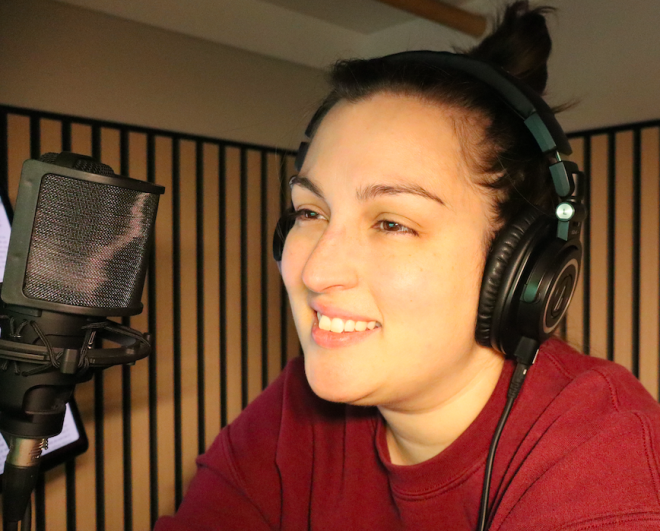
Torin Andrus (She/They) is a full time voice actor and digital artist residing in the PNW. After many years working corporate life, they are happily expanding on all the creative dreams they’ve carried with them since childhood. They’ve spent many years now voicing audiobooks and audiodramas, creating their own Audiodrama, and interviewing wonderful creators. Currently, they’re obsessively learning more about comic art and photography in any free time they find.
Kitty Sarkozy

Kitty Sarkozy is a speculative fiction writer and actor. She is an Associate Editor of Pseudopod, an award-winning weekly horror podcast in the Escape Artists network. Several large cats allow her to live with them in Marietta GA, She enjoys tending the extensive gardens, where she hides the bodies. For a list of her publications, acting credits or to engage her services on your next project go to kittysarkozy.com.
