

Cast of Wonders 695: Goldenrod
Goldenrod
by A. James
It was Krissy who loved the old McCarson house. I didn’t see the appeal. It had a frightening precarity to it. The house’s powder blue paint peeled and flaked in the front like lichen, and its front pillars were stripped back to the wood. Its steps crumbled like clumps of dry soil. During storms, the broken shutters thrashed and the rusted fence wailed.
It was also Krissy who concocted the plan to sneak over the orange-tinged chainlink fence. We went around to the back of the house so no one would see us. On this side it looked nicer. The back door swung open to our touch on screeching hinges. Inside, the walls and floors were cloaked in translucent sheets of plastic that crackled as we walked. Well, I walked. Krissy bounded and twirled, her mouth stretched in maddening glee. She scurried from one space to the next like an eager little mouse.
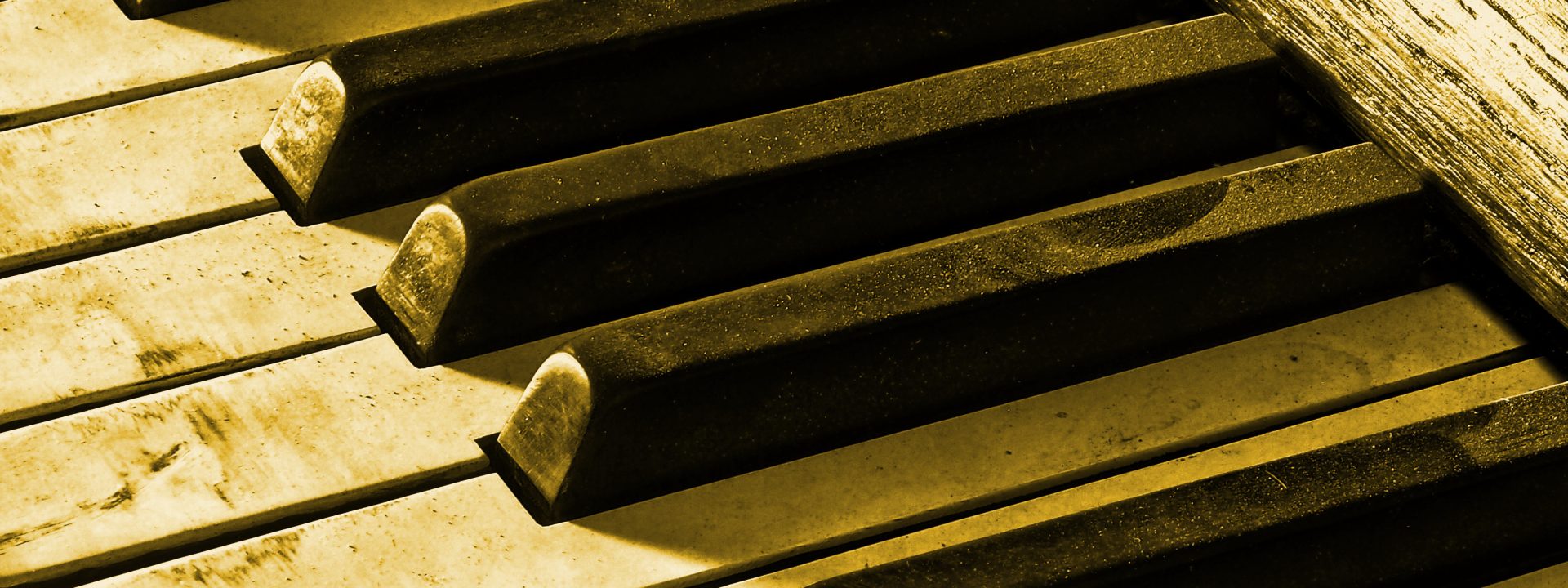
“Sid, come look at this!” Krissy cried from another room. The house groaned as I made my way across the hall. Krissy sat at a large piano. The translucent sheet of plastic that had protected the instrument lay in a crumpled heap on the ground.
“We shouldn’t touch anything,” I admonished quietly.
“Relax, the authorities took care of the house after the McCarsons. No one’s been here in like twenty years. It’s fine.”
Krissy cracked her knuckles, sending me a smirk. Then she tossed her head back, dark curls dancing, and slammed her fingers against the old keys.
The sound was deafening, and horrifically out of tune. Krissy continued to pound the keys with furious concentration.
I had no reason to be frightened. The McCarsons and anything dangerous in their house was long since gone.
After that, the McCarson house became our secret refuge. We would sneak out to the property mid-day after some careful lies to our parents. Krissy told me that her parents were happy for her to leave the house. It made sense. My mom was always talking about how hard it must be for Mrs. Richards to handle and feed all those kids. Sometimes I wished I had as many siblings as Krissy. I wouldn’t have to do so many chores if they were split up between six kids instead of two. Plus, Ben was pretty useless. He shouldn’t even be helping with chores anymore, but working with the rest of the men. Krissy’s brothers and sisters seemed more conscientious.
I often had to rush to complete all of my tasks in time. Sometimes I wouldn’t be done with all the cleaning or my reading assignments and I couldn’t get away. On those days, I suspected that Krissy went to the house without me. She denied it though, saying that the house belonged to both of us.
But I knew that wasn’t true, the McCarson house was a part of Krissy in a way that was beyond my comprehension.
She still liked to play the piano at the house, although more softly now. She was getting good too, replicating the songs on the old tapes my parents played in the boombox. Sometimes she would warble along as she pressed the keys, trying to mimic the voices we heard.
I liked to wander through the old rooms like a phantom. I imagined that the ghosts of the McCarsons roamed the house like this too. There was a little girl with bows in her hair. She bounded through the halls in pink shoes. They were pretty shoes, with straps and lacy socks, the kind my old dolls wore. The mom and dad ghosts were more lethargic. They stumbled around slowly like drunkards. The grandmother’s ghost hardly moved at all. She sat on one of the plastic-covered chairs and rocked back and forth.
I knew it was silly though. Ben had told me about the people with the special jackets who had come to help. He was 10 years older than me and could remember such a time. With how thoroughly this house had been cleaned, I’m sure they managed to scrub the ghosts right out too.
Sometimes I pretended that the house itself was alive and that each creak was it trying to communicate, crying “Sid! Sid!” I imagined the walls warping as the house breathed in and out, inflating like a balloon. My parents never approved of my imaginings. Living in this world is hard enough, they’d say. Why invent a new one? I supposed they were right. Those games, fun as they were, always left me feeling empty, as if my soul had been scooped out by a melon baller.
Time passed, and I became more certain than ever that Krissy was going to the house without me. Doors that were open when we left were closed when we returned. She didn’t mention it, so I didn’t.
She was getting bored with the house too, not enough to stop visiting, but enough to begin seeking other adventures. She wanted to go to the old river. I told her no, of course. The house might not be dangerous anymore, but the river would forever be a threat.
My father kept old newspaper cuttings about that time. They have never left my thoughts. I animate the photos in my mind, the glimmering silver fish thrashing on the shore, a growth of shelf-like mushrooms protruding from its gills. They are cherry red and shiny like my old rubber rain boots. I wonder if it hurt. Did the fish feel it like a festering sore? Or was the creature entirely oblivious to the foreign body that had latched on and made itself at home? The second option seemed worse. I would prefer a painful sanity to a blissful madness.
One day, Krissy told me that she was too busy to go to the house. I figured she was mad that I had turned down her suggestion of the river. I didn’t ask what she was doing instead. I didn’t want to know. Krissy was like Odysseus, the heroic adventurer. I was just one of her shipmates, destined to be gobbled up by a sea monster. She had no need for fear. The hero never dies.
That night I dreamed a blood-red fungus grew from my stomach up the inside of my throat. I could feel and hear the scratching as it grew. I woke up in the dark comfort of my bed, choking and clawing at my neck.
Krissy vanished shortly after. She had a tendency to wander and hide: often because she was mad at her family, but this time I couldn’t help but think it was because she was mad at me. It took three days to determine that this was not normal Krissy behavior.
The town sent out a search party. I chided myself for being foolish, but still wondered if Krissy had somehow crossed into an unseen world. Perhaps she had stepped through some wardrobe door into a distant land or had been swept away by the fae to the Seelie court. Perhaps she had found a way to become one of the soft stars in the sky. I think that existence would have suited her. The stars are always wandering.
But this was reality. This was Krissy.
On the fifth day after her disappearance, I went to the McCarson house. I had suspected it was Krissy’s hiding place, but wanted to give her time to wallow in her anger. That way, she would be more gracious when I found her.
I cut my hand on the rusted fence. It was a clean slice, the blood welling like a ripe tomato. I pressed my palm into my skirt as I climbed the uneven back steps.
The house was silent, with no sign of Krissy. Without her, I felt like an interloper. The walls leered at me. The crackle of the plastic sheeting felt incriminating and I bade my feet to walk lighter.
“Krissy,” I called softly, like I was coaxing one of our chickens. I could only hear myself breathing as I waited for a response. I crept forward carefully.
“Krissy. Come on. I’m sorry,” I called once more, louder this time.
“Krissy!” I shouted. Nothing.
I walked down the hall, spying the basement stairs out of the corner of my eye. The old door was ajar, the steps illuminated by the pale light through the window. The plastic covering the stairs had been swept aside and pressed against the baseboards.
I stepped cautiously, careful to avoid the planks that had turned soft and pulpy like old fruit. I was surprised they had been allowed to rot, to reach that treacherous state.
Beyond the gaping door lay a vacuum of darkness. I nudged it open further with my foot, hand still wrapped in my skirt. The light from the window upstairs seeped into the room like a trickle of water.
Then, I saw it. I slammed the door shut, wood biting against my bloodied palm. I raced up the stairs, nearly catching my foot in a damaged step.
Reaching the hallway, I kept running, pushing open each door as I went and searching frantically for any sign of Krissy.
“Krissy! Come on!” I shoved another door open.
“We have to go, Krissy, there’s…” I trailed off as I found her. She was seated at the old piano. Not a single curl on her head shifted as I crossed the room.
“Get up, Krissy. It’s in the basement. Everywhere. We have to go. We have to tell someone.”
I reached out to grasp her shoulder, stopping within a hair’s breadth.
There, plain as day, her eyes were goldenrod. The yellow fungus grew from her eye socket, blanketing her nose and mouth like a gag. It trailed down her tan arms in small golden paths all the way to her fingertips. There, it left her body and rooted to the piano keys before climbing up to the wood of its massive form.
Krissy didn’t move when all the air left my body in a piercing cry, when I spewed the contents of my stomach onto the tops of my shoes, or when I bolted.
That day they burned the McCarson house to the ground. The ash drifted through the air like snowflakes and blanketed the land like crumbled concrete.
No one left their homes or opened their windows for two weeks.
About the Author
Alexandra Resnick (A. James)

Alexandra Resnick (A. James) is a writer and chemical engineering student at Georgia Tech. She has written a middle-grade mystery book, Do Not Take the Train. “Goldenrod” is her first short story. In her spare time, she enjoys baking, gardening, and of course, reading.
About the Narrator
Katie Gill
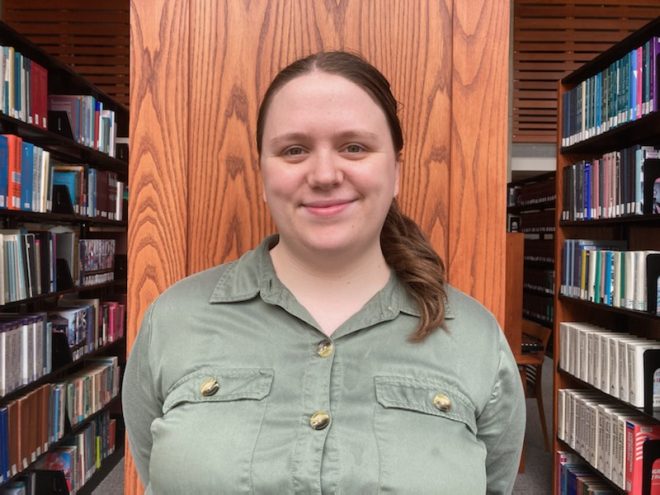
Katie Gill is a librarian by day, essayist and podcaster by night. She has previously published at The Deadlands, Anime Feminist, and Manor Vellum. Hear her voice on various podcasts including PseudoPod and Stacks and Stories. You’ll find her on social media @katiebeluga
