

Cast of Wonders 667: Amudha Surabhi
Amudha Surabhi
by Tehnuka
Mallika beat her skirt against the washing rock twice more and wrung it out a final time, brown-tinged water dripping along her fingers. Whatever she did, the fabric retained the grey hue it had acquired when the new manufactory started spitting out steam and coal-smoke last year. And she’d have to darn that hole in the hem, too. The other girls might get new clothes for Deepavali but it would be a surprise if Amma remembered the festival at all.
She washed her mother’s sari and laid it out to dry, then sat kicking her feet against the bank, watching the smooth flow of the river below. This time of year, it should have been fast, eddying, chai-coloured with monsoon runoff. Instead, she’d had to clamber down just to reach the water. Mallika knew there would soon be bigger difficulties than stained clothes.
A long rumble from the other side of the village told her the late afternoon train was passing. It never stopped in the village—they didn’t have a station—and having seen how local passengers clung to the outside of the third-class compartments, Mallika had no desire to travel on one. But that sound meant Amma should be home from her work at the co-op. She’d be preparing the evening meal on the low-fuel cooker she had designed and built, frowning because there was too little millet left in their storage pot. The village gave a fair share of the harvest in exchange for Amma’s work—the problem was, everyone had less to share these days. Mallika hoped the bullock-cart she’d seen arriving that morning had brought a few sacks of grain.
Scuffing her feet against the cracked earth of the footpath, Mallika headed home. She could scrounge some yellowing leaves from her little garden for a keerai curry. Perhaps they’d have full enough stomachs for a few more days.
Mallika’s aunt—Periyamma—said there was no use being upset, because there had always been hungry years. Even in the ancient literature there were stories of the Akshaya Patra and the Amudha Surabhi, magical vessels gifted by the divine to provide endless supplies of food in times of famine. Scarcity was part of life, and if the rains didn’t come, it was only the will of the gods.
Amma was born ten years after Periyamma, too late to hear those old stories from their grandparents. According to her, the scanty monsoon rains should not be cause for famine. No, the problem was that their grain fields were now used to grow thirsty crops like rice and cotton, which were then packed up onto the trains and sent overseas on steam ships for the vellaikkārar, who had grown as powerful as Periyamma’s gods.
Mallika didn’t see how it made any difference. Would anyone have the energy to care whose fault it was, once a famine began?
Amma wasn’t in the courtyard with the cooker. She wasn’t inside disassembling it, as she did several times a week when it started emitting the same ominous squeals her prototype had made before exploding. No one else minded that she spent most of her time repairing her mistakes, rather than on new inventions for the village. “Your Amma is very clever. No one can think of everything!”
They weren’t the ones who had to test the prototypes.
Mallika wandered her wilting garden and finally pulled some mustard greens. Should she light the stove and start the millet kanji? No, then it would seem like her fault if the cooker malfunctioned. If anyone blew up the house with one of Amma’s yandirangal, it should be Amma. Why wasn’t she back? They’d argued again about her working constantly just last night.
“You don’t care about me!” Mallika had cried. “You only care about your yandirangal.”
Amma didn’t know how to respond. “Darling, I’ve raised you for sixteen years, I say I love you, I work hard to build or earn everything you need—isn’t this all clear evidence I care about you? What is the most probable conclusion?”
“That, on the balance of evidence, there’s still a non-zero probability that you don’t care about me!”
“My clever girl, talking probabilities!” Amma said, then suggested they could spend time together by working on joint inventions.
Why couldn’t she say, “I love you more than anything, and I’ll come home early tomorrow?”
No doubt she had lost track of time. Mallika left the greens on an earthenware plate and went back out into the dry afternoon heat, taking the riverside footpath towards the co-op mandapam.
The bare earth outside the mandapam was more of a meeting-ground than the village temple was. Nearly everyone who didn’t work in the fields or the manufactory did their work in the mandapam. The children gathered outside to play kilithattu.
Amma wasn’t even working. She sat outside the co-op mandapam drinking chai, watching the children, and gossiping with her friends.
“These railways are ruining everything,” she was saying. “We don’t need these ugly rails taking all our rice onto ships for other people to eat. We are going to travel instantaneously. We are going to sell our own transport tickets to the Britisher. There is no third-class on this vāhanam…but we can make them pay triple.”
Everyone else laughed.
“Amma! This is like the good-for-nothing airship you were building last year, isn’t it? You said you were going to sell third-class tickets on that, too.” Mallika folded her arms. “Can you come and help with the stove?”
Amma laughed. “The airship needed far too much coal. I forgot to include it in my calculations. Anyway, we were able to reuse most of the parts elsewhere.”
“The stove, Amma?”
Putting her clay cup aside, Amma rose. “My new yandiram is much better than an airship, and it’s ready to test. Come and see!”
At least it was cooler inside the spacious hall. Periyamma smiled at Mallika from the corner where she was spinning yarn on her charkha. The place smelt like lightning.
Someone yelled, “Adi, fetch that lantern here!” and Mallika turned to see a woman in a calf-length sari—probably just returned from the fields—clattering a large mirror over the stone floor. Another woman ran across carrying a brass-framed, glass-sided lantern. Mallika pushed dinner to the back of her mind, fascinated by the gleaming objects. “Where did these things come from?”
“They’re doing an experiment with light,” said Amma. “That jamindar is sponsoring it. He sent a bullock-cart this morning, did you see? It was full of equipment. I received some essential components for my yandiram also.”
Mallika sighed. “I saw.”
“And now, look at this!” Amma stopped at a rickety booth-like structure with a wooden frame and woven coconut palm-leaf walls. Bamboo rods protruded from the back towards a small brass box. The structure was just large enough to step into.
“How does it move, then? Does it have wheels?”
“Of course not.” Amma pointed back the way they’d come. “Look over there.”
“There are two of these contraptions? How does that help?”
Amma slid one of the woven panels aside, revealing that the structure comprised only a roof and four walls, placed directly on the stone floor of the mandapam. “Didn’t I tell you about this last week?”
Keeping track of her mother’s various projects was impossible. Mallika had given up trying a long time ago.
“Just tell me. What is it?”
“Look! See that manjādi koddai?”
A shiny red seed the width of her little finger lay on the stone floor.
“Ah, I understand. If I stand here long enough, eventually the seed will germinate and grow, and my corpse will end up five metres in the air.”
“No, I just want you to observe the seed is there.”
“You know the tree won’t grow without soil and water?” Her mother had been the one to teach her to garden as a very young child. Plants, not machines, had been her passion then.
Amma closed the booth, took her hand, and pulled her towards the second booth. This one lacked the bamboo rods, but was otherwise identical. “Look inside. See that pile of dust? Every infinitesimal part of every dust mote inside it is going to be connected on a cosmic level to that manjādi seed you just saw.”
“Nallathu, can we go and cook now? I’m hungry.”
“Good girl.” Amma patted her shoulder. “Stand here, and open the door again when I tell you.” She closed the panel and returned to the first booth, with the rods.
Periyamma had come over to watch. The others in the mandapam continued with their work, although the couple making light experiments cast a wary eye in Amma’s direction when her yandiram began to hiss.
Nothing happened.
As long as Amma didn’t decide to stay late to fix it, this seemed the best possible outcome.
“Open it and see!” called Amma, obscured behind a cloud of steam.
Mallika dragged the woven panel of the second booth aside. A shiny red seed the width of her little finger lay on the stone floor.
Speechless, Mallika turned to her aunt, who smiled. “In the same way as the sages achieved great powers through meditation, this dedicated work of your Amma can yield—”
Feet slapping on stone, Amma came to look over their shoulders.
“You see? It works! Teleportation. As long as raw material is available, creating a connection between their infinitesimal components causes one to become the other. Next, I will try something larger! Perhaps a bowl?”
The orange light of sunset stretched long fingers into the manadapam. “Amma—”
“Yes, yes, the evening meal. Imagine a room like this in every village across the land! Imagine rooms like this around the world!” Amma squatted to pick up the manjādi seed, rolling it around her palm. “The Britisher would have to come to us for everything.”
“But Amma—”
She stood and gripped Mallika’s hand tight, her voice growing louder as she continued. “We could travel the world! Nepal first, I think, there is an inventor I have exchanged a letter with. This is far better than an airship. We could never have flown one in the mountains anyway. And then—”
“No, Amma, what happened to the first seed?”
A deep furrow appeared between Amma’s eyebrows. “The first seed…”
“The one you sent. You said the dust became the manjādi koddai. What happened to the first one?”
It was Periyamma who led the way. She opened the first booth and reached into the dim interior, patting the floor with her hand until she encountered the original seed.
“Are you going to help with the stove, or do you have to fix this immediately?” asked Mallika.
“There’s nothing to fix,” said Amma quietly. She sat down, legs crossed, wringing her hands. “It’s a fundamental error in the design. We can’t use this. We can’t have two of everyone, so we can’t use this—”
“If you went somewhere and came back, there would be three of you,” said Periyamma, sounding as if she might like to try it.
“—not unless we destroy the original person.”
Mallika sat next to her. The floor was hard and cold against her legs. Her stomach burned with hunger. “Amma, no one will want to use a yandiram like that. That is, no one here would use it, and you can’t sell it to the British. There’s enough of them already. Let’s go home. You can invent a new thing in the morning, and everything will be better. Maybe a yandiram to wash our clothes?”
“I’ve wasted all this time on a machine that can only duplicate manjādi seeds. And do you know what? The manjādi tree can already do that perfectly well for itself.” Amma beat herself repeatedly on the forehead with her fist. “What a fool I am.”
“It’s not a complete waste, Amma. You can reuse the parts. Or we can cook the seeds and—Amma!” She grabbed her mother’s wrist. “Amma, millet grains are even smaller than the manjadi. Could we put those in your yandiram? Can it do many grains at a time?”
Amma scrambled up. “Adi, my clever girl! Is there any millet left at home? Come on!”
They went to sleep with still-empty stomachs that night, but only after filling the pot with raw millet until it overflowed. Amma promised to fix the stove later.
Every day afterwards, her mother pleaded with Mallika to come to the co-op mandapam to assist. But she had the housework, and her garden to tend—and if she gave in once, she’d spend all her days in that hall instead of out in the sunshine. The rest of the village youth were happy enough to fetch and carry food to be duplicated or the soil needed as raw material, and they’d help with repairs when Amma’s latest yandiram inevitably broke. Most of the village crowded into the mandapam each morning anyway, to watch their food supplies double.
So Mallika was a little surprised when Amma woke her early on Deepavali and handed her a soft, pale grey bundle.
She sat up on her sleeping mat and unfolded it. The hole at the waist had been mended.
Looking down, she realised she was already wearing the same skirt.
“It’s not as good as a new one, but it’s newly made. Periyamma is making a real new one, but until then, you won’t have to do the washing as often.”
Mallika hoped it had been clean when Amma replicated it.
“Those girls made their light experiment work,” Amma added. “They’re showing everyone tonight. Will you—”
“I’ll come,” said Mallika. “Will you start the stove before you go? It’s making noises again.”
“No, I’m cooking this morning. Someone brought all their spices to the mandapam last night and put them through the Amudha Surabhi to share. Go and wash your face, and change that holey skirt.”
“You could have mended the original one before duplicating it.”
“Oh. You’re right. That would have been sensible, wouldn’t it?” Amma stroked her hair. “What good fortune to have a clever girl like you!”
“And what good fortune,” said Mallika, kissing her cheek, “to have a clever Amma like you.”
Host Commentary
The mad scientist trope is often good fun in fiction, but a lot of the time it’s also an unhelpful misnomer. For me, Mallika’s Amma is simply a solid portrayal of a creative, neurodivergent engineer, all focus and enthusiasm, not so much absent minded as mind consumed in a project that matters deeply. Sometimes that focus obscures the other people and things she cares about, but the love is always there.
The madness in the science is just the magic in what it achieves: impossible inventions, but a very real, very human inventor. I think that’s one reason why I enjoy steampunk fiction so much: it centres the sense of wonder in the science, and encourages creative, aspirational solutions to problems. I’d love to read more stories about these characters.
About the Author
Tehnuka
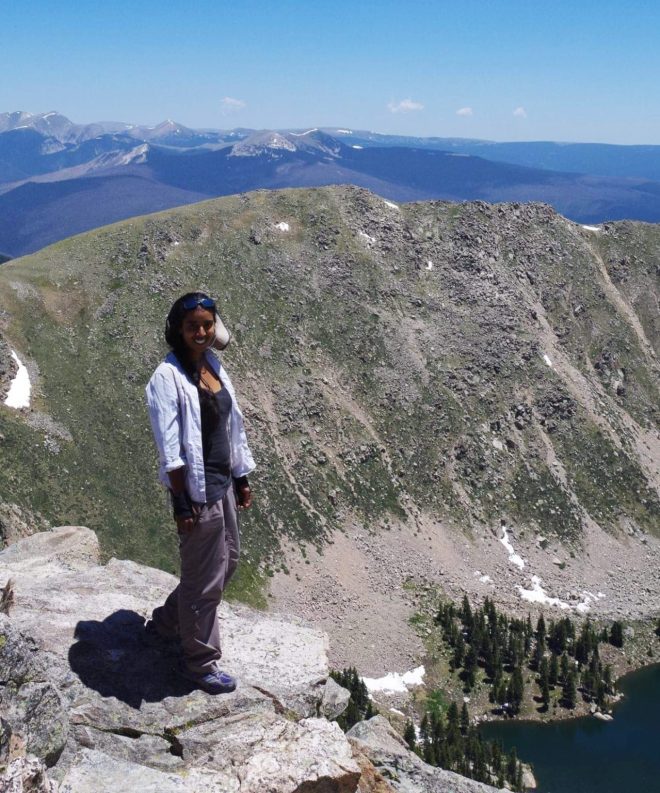
Tehnuka (www.tehnuka.dreamhosters.com) asks you to refuse the genocide and oppression of Palestinian people, and of all people; to stand for justice against the colonisation of Palestine; to draw courage from compassion and, in whatever way you can, to resist, resist, resist.
About the Narrator
Shweta Adhyam
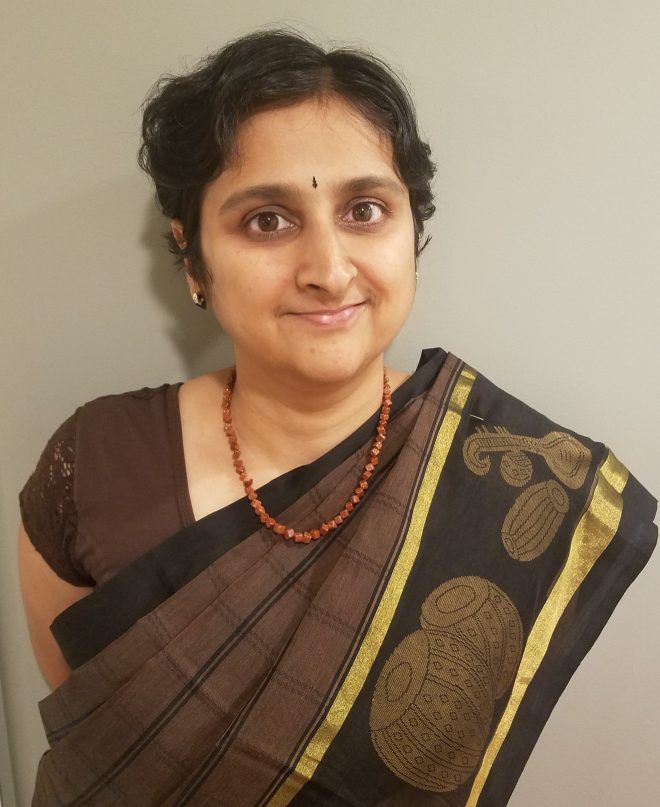
Shweta speaks five languages, has had four careers, is three layers of immigrant, calls two cities home, and believes escapism is of the first importance. She is frenemies with ADHD, knows far more about Hindu mythology than is good for her, and volunteers for Clarion West. She lives with her spouse and child.
